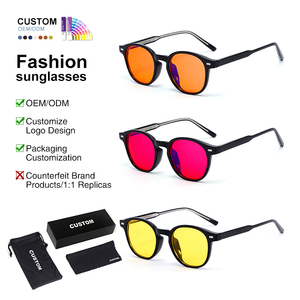
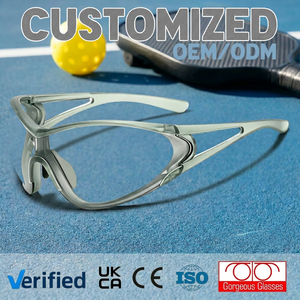
Engineered from virgin Swiss EMS-Grivory PA12 memory polyamide, our optical frame portfolio satisfies stringent international prescription assembly benchmarks, dynamic flex fatigue thresholds, and prolonged biocompatibility tests.
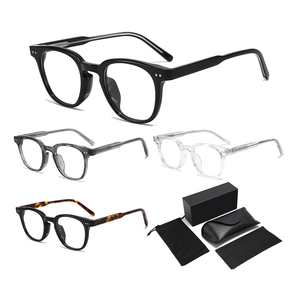
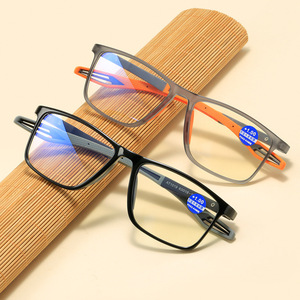
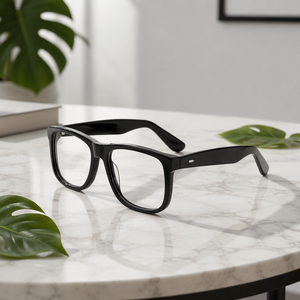

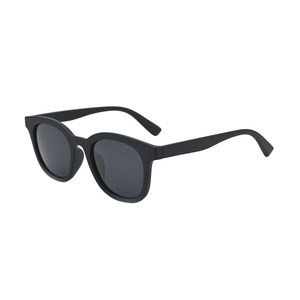
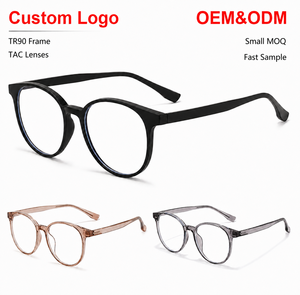
TR90 (thermoplastic polyamide 12) originated in Swiss polymer laboratories to overcome the brittle failure mechanisms of traditional polycarbonates and the excessive density of cellulose acetates. In modern optometric dispensaries, TR90 frames have evolved into an indispensable category.
TR90 exhibits an extraordinary flexural modulus (approximately 1600 MPa) coupled with an elastomeric memory response. When subjected to significant torsional stresses, impact, or facial contour compression, the polymer chains dissipate energy through reversible molecular uncoiling. The frame snaps back to its calibrated optical pantoscopic tilt and facial wrap angle without structural fatigue or plastic deformation, significantly reducing patient returns due to frame misalignment.
Under the stringent requirements of EU Regulation 2017/745 (MDR) for Class I medical devices, ophthalmic frames must undergo exhaustive biological evaluation under ISO 10993-5 (In Vitro Cytotoxicity) and ISO 10993-10 (Irritation and Skin Sensitization). Our CE certified TR90 is completely inert, free from plasticizers, and devoid of heavy metals or nickel compounds, eliminating contact dermatitis even during heavy perspiration or extended wear.
Unlike conventional commodity plastics that soften at 65°C, Swiss-formulated TR90 maintains dimensional stability up to 350°C for short cycles and operates continuously within -30°C to +80°C environments. It resists cosmetic solvents, sebum degradation, sunscreen chemicals, and perspiration acids, ensuring the frame finish avoids cracking, chalking, or delaminating across multi-year retail cycles.
| Material Parameter | Certified Swiss TR90 (PA12) | Cellulose Acetate | Standard Polycarbonate (PC) | Recycled / Mixed Polyamides |
|---|---|---|---|---|
| Specific Density (g/cm³) | 1.14 (Ultralight) | 1.28 – 1.32 (Medium Heavy) | 1.20 – 1.22 (Moderate) | 1.18 – 1.25 (Variable) |
| Flexural Fatigue Life | > 50,000 cycles without yield | Approx. 10,000 cycles | < 5,000 cycles (Micro-cracking) | 15,000 – 20,000 cycles |
| Cold-Glazing Capability | High (Up to ±0.4mm tolerance) | Requires Hot-Air Warming (~55°C) | Poor (High Risk of Splitting) | Moderate (Unpredictable) |
| EN ISO 12870 CE Compliance | Passed all clauses (100%) | Passed with standard hinge | Prone to stress cracking test failures | Inconsistent batch compliance |
| Prescription (Rx) Retention | Exceptional (No groove creeping) | Excellent (May warp in hot cars) | Fair (Internal stresses alter optics) | Poor to Moderate |
International optical trade buyers face evolving consumer expectations, regulatory scrutiny on sustainability, and the rising convergence of ophthalmic correction with smart functionality. Navigating these shifts requires forward-looking frame sourcing strategies.
The next frontier in TR90 procurement centers on castor-seed-derived bio-polyamides (such as Rilsan Clear / Grilamid BTR). Institutional buyers across the EU and North America are mandating environmental product declarations (EPDs) with verifiable bio-content exceeding 45% without sacrificing tensile elasticity or crystal-clear transparency. Suppliers with certified circular feedstocks are commanding prime distribution shelf space.
Bulky molded frames are being replaced by high-precision, thin-wall injection technology yielding eyewire rim profiles as slim as 1.6mm. Concurrently, co-molding techniques fuse TR90 front rims directly with Grade 5 Beta-Titanium or memory stainless steel temples. This hybrid architecture pairs the featherweight hypoallergenic comfort of polyamide with the micro-adjustability required by dispensing opticians for custom temple-tip bends.
Prescription frames are increasingly engineered as modular platforms. Optical buyers prioritize TR90 frames designed with internal micro-recesses for neodymium magnetic polarized sun clip-ons, blue-light digital work lenses, and even conductive channels for open-ear directional audio transducers. TR90's dimensional stability prevents magnetic clip misalignment while providing impact-damped housing for miniature electronic components.
Delivering zero-defect ophthalmic frames requires strict control over raw resin conditioning, hot-runner mold tooling, robotic surface vaporization, and automated optical edging validation.
Virgin PA12 granules are dehumidified to moisture contents below 0.02% in closed-loop desiccators. This prevents hydrolytic polymer degradation inside the injection barrel, eliminating silver streak defects and micro-porosities.
High-grade German mold steel hardened to HRC 52-54 with balanced valve-gate hot-runner manifolds ensures uniform shear rates and simultaneous cavity packing, preventing residual internal stress and asymmetric frame warpage.
Precision 6-axis robotic spray arms apply UV-curable, low-VOC polyurethane soft-touch lacquers and scratch-resistant clear coats within Class 10,000 cleanrooms, achieving 4H pencil hardness and 100% adhesion under cross-hatch tape testing.
Automated vision measuring machines inspect critical groove bevel geometries, eyewire circumference tolerances (within ±0.05mm), temple screw torque retention, and bridge bridge-widening endurance before final export packaging.
Combining European design aesthetics with scalable Asian manufacturing precision, our organization bridges technical compliance, responsive product development, and reliable transatlantic logistics for commercial eyewear importers.
Every shipment is accompanied by complete Technical Documentation Files (TDF), CE Declarations of Conformity under EN ISO 12870, FDA Owner-Operator registrations, and REACH SVHC test reports for seamless customs clearance.
Our in-house CNC mold-making department translates CAD concepts into physical master samples in 14 days, with full multi-cavity hardened steel production molds ready in under 35 days, accelerating your speed-to-market.
We maintain flexible minimum order quantities (MOQs) across core colorways, providing boutique practices and independent retail chains with distinctive collections that keep them distinct from big-box mass retail optical boards.
100% of finished production runs undergo optical bench edging tests, ultrasonic bridge stress simulations, 96-hour salt spray corrosion testing for metal inserts, and drop-ball impact resistance audits prior to release.
Direct technical and commercial answers addressing regulatory compliance, optical laboratory edging procedures, minimum order conditions, and material verification.
To bear the valid CE mark under the European Medical Devices Regulation (EU MDR 2017/745) for Class I non-sterile devices, optical spectacle frames must comply strictly with EN ISO 12870:2018 (Ophthalmic optics — Spectacle frames — Requirements and test methods). Critical testing parameters include Clause 4.2 (Dimensional tolerance of lenses), Clause 4.4 (Resistance to optical radiation / UV stability to avoid discoloration), Clause 4.5 (Resistance to perspiration with artificial acid immersion), Clause 4.7 (Bridge deformation endurance up to 500 mechanical compression cycles), Clause 4.8 (Lens retention under dynamic impact and internal stress), Clause 4.9 (Endurance to 20,000 temple hinge opening/closing operations), and Clause 4.10 (Biocompatibility under ISO 10993). Our complete technical files and lab certificates issued by accredited notified testing bodies are available for importer verification.
TR90 is a "cold-glazing" polymer. Unlike traditional cellulose acetate which requires thermal softening at approximately 55°C–65°C using frame heaters, heating TR90 excessively is counterproductive because its high melting point (~178°C) prevents plastic flow at standard frame warmer temperatures, while localized uneven heat can warp the lens bevel groove. Instead, optical finishing labs must calibrate lens bevel sizing precisely: modern CNC edgers should be set to standard V-bevel angles (typically 110°–120°) with an eyewire circumference tolerance of exactly +0.2mm to +0.4mm. The natural elasticity of the TR90 rim enables the lens to snap securely into the groove under ambient temperature, holding cylinder axis alignment and high-minus or high-plus powers without optical creeping or rim strain.
Commercial adulteration with low-grade PA6, recycled nylon, or reground polycarbonate is a common risk in cut-price markets. Genuine Swiss EMS-Grivory Grilamid TR90 can be identified through four reliable methods: Specific Density Test: Pure TR90 has a specific gravity of 1.14 g/cm³ (it floats in water mixed with common table salt at 1.15 density, whereas adulterated blends sink). Flexural Memory Snap: Cold bending the temple beyond 120° returns 100% to its original position within 1 second; recycled nylons suffer white stress-whitening lines or permanent bending deformation. Acetone Chemical Resistance: Pure TR90 is impervious to 30-minute acetone swabs, while cheap PC/acrylic frames craze and dissolve instantly. Thermal Differential Scanning Calorimetry (DSC): We provide certified raw resin supply chain documentation tracing directly to official polymer producers.
For catalog in-stock designs with custom logo printing (laser engraving on the core wire or high-density pad printing on the inner temple), our minimum order quantity starts as low as 100 to 300 pieces per model (divided across 2-3 curated colors). For complete bespoke OEM/ODM custom mold development, the initial production threshold is typically 1,200 pieces per mold (300 pieces per colorway). 3D SLA rapid functional prototypes are dispatched within 5 to 7 business days; pilot CNC steel tooling takes 20 to 25 days; full mass manufacturing cycles run 35 to 45 calendar days after pre-production sample sign-off.
Because pure TR90 possesses exceptional molecular memory, cold-bending unreinforced solid TR90 temples will simply spring back to their molded geometry. To resolve this clinical dispensing challenge, our high-end optical frames incorporate an integrated German-engineered nickel-silver or titanium core-wire co-molded inside the temple shaft. This structural core allows dispensing opticians to heat the temple end gently (at 45°C) and shape a permanent anatomical contour around the patient's mastoid bone without compromising the featherlight, non-slip comfort of the exterior TR90 sleeve.
Connect directly with our engineering and international export team. Request certified compliance dossiers, inspect physical sample sets, or initiate bespoke OEM mold tooling tailored to your regional market requirements.