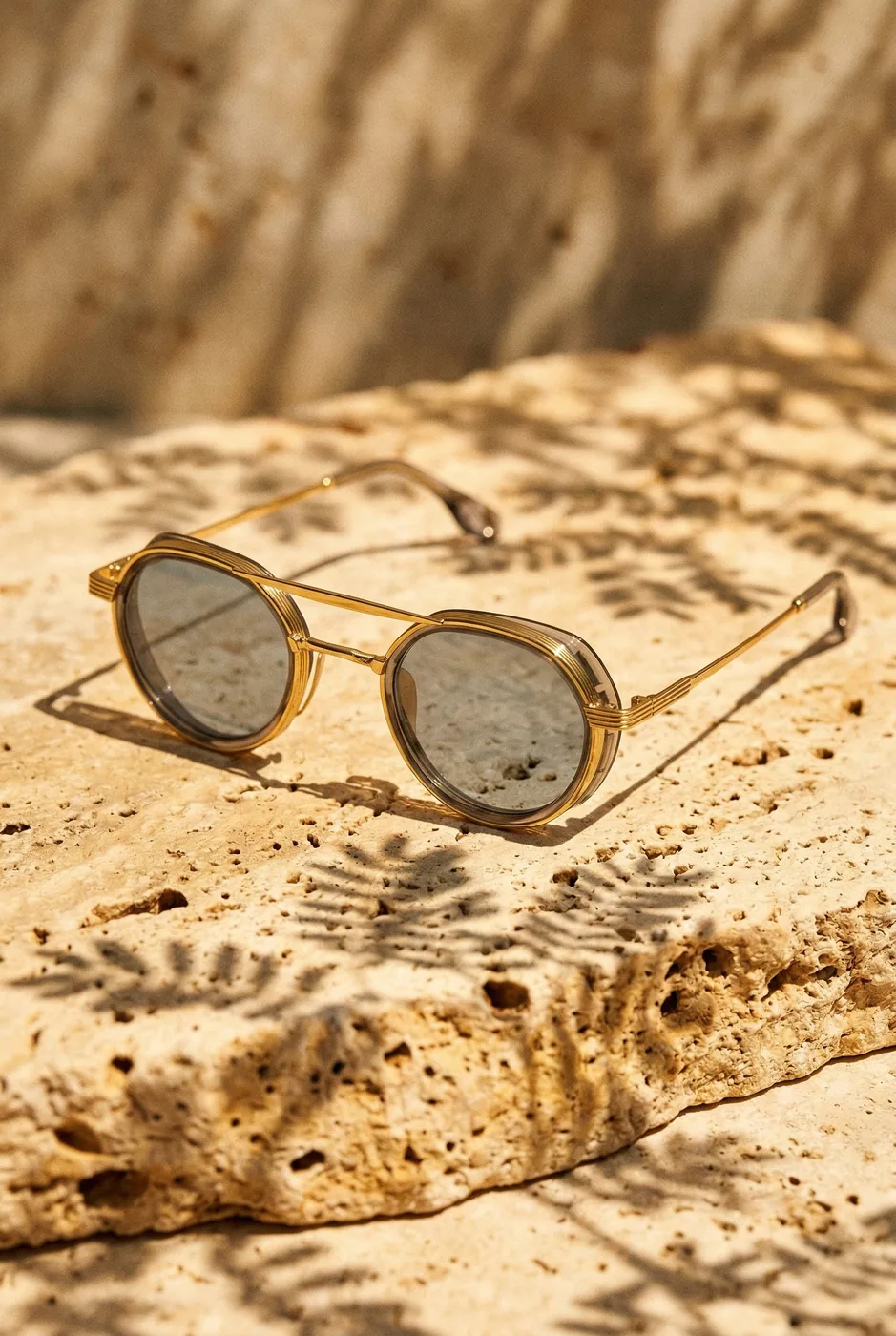





High-Density Bio-Acetates & Block Titanium
Modern contemporary eyeglass frames diverge from standard extruded plastics through the utilization of high-density cellulose acetate, sourced from historical producers such as Mazzucchelli 1849. Aged curing processes eliminate residual solvent moisture, preventing thermal warping and bridge splay under high-index lens tension. Concurrently, micro-milled block titanium and Japanese beta-titanium wires provide superior tensile memory, exceptional corrosion resistance against skin acidity, and total hypoallergenic biocompatibility.
Pantoscopic Tilt & Vertex Distance Calibration
Modern digital free-form progressive lenses demand optical chassis with predictable chassis dynamics. Contemporary eyeglass frames are precision-engineered with calibrated pantoscopic tilts (8° to 12°) and facial wrap angles (4° to 6°). This geometric discipline preserves optimal corridor alignment, mitigates peripheral astigmatic distortion, and ensures that lab-edged prescriptions fit flush within the bevel channel without inducing mechanical frame stress or lens birefringence.
Architectural Hinge Assemblies & Weight Distribution
Hinge failures remain the primary cause of dispensary warranty returns. Independent buyers prioritize contemporary designs incorporating screwless barrel systems, friction-calibrated cylinder joints, or five-to-seven-tooth multi-barrel hinges secured via micro-riveting. By shifting the frame center-of-gravity posterior toward the mastoid process via ergonomically sculpted paddle temples, contemporary frames relieve nasal cartilage pressure, ensuring all-day wearability.