Explore our export-ready optical frames engineered with precision composite filaments, bio-acetate laminations, and ergonomic temple contours.

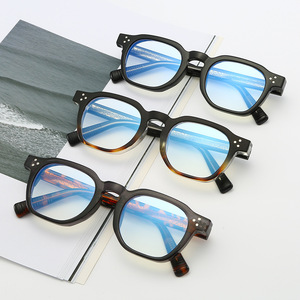
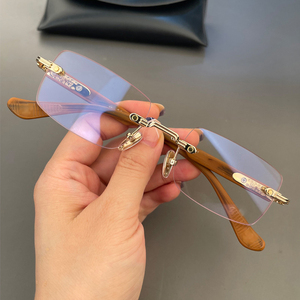
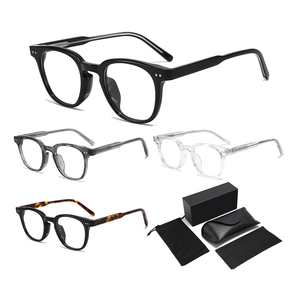

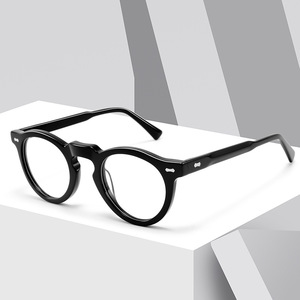
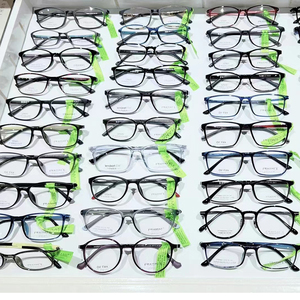
In the competitive landscape of international optical frame manufacturing, transitioning from conventional metals and standard extruded acetates to continuous filament carbon fiber composite matrices represents a monumental leap in mechanical performance. As China's premier manufacturer and exporter of luxury composite eyewear, we harness Toray T700 and T800 grade polyacrylonitrile (PAN)-based carbon filaments embedded in high-glass-transition-temperature (Tg) thermosetting epoxy resins.
Unlike injection-molded short-fiber plastics which suffer from anisotropic structural degradation and weld-line brittleness, our engineered composite fronts utilize a multi-axial prepreg stacking sequence (typically [0°/45°/90°/-45°]s). This symmetric cross-ply schedule provides quasi-isotropic tensile modulus, neutralizing internal residual stresses that would otherwise induce frame warpage during high-base prescription lens glazing.
The primary failure mode in generic carbon fiber eyewear is hinge pull-out caused by delamination between the carbon composite substrate and the metallic barrel hinge. Traditional adhesives fail under thermal cycling (-20°C to +60°C) and cyclical shear stress (exceeding 20,000 temple flexion cycles under ISO 12870 testing standards).
Our engineering facility has solved this structural vulnerability by developing an integrated co-cured titanium anchor housing. Prior to autoclave thermoset curing at 135°C and 6 bar pressure, micro-etched titanium grade-5 inserts are positioned within the carbon plies. During polymer cross-linking, the resin matrix flows into sub-micron surface cavities of the titanium insert, achieving a mechanical-chemical co-bond capable of withstanding over 180 Newtons of tensile extraction force without fiber tear-out.
While pure forged carbon fiber yields an aggressive, high-tech industrial aesthetic, dispensary clients and discerning consumers frequently demand the tactile warmth, rich coloring, and cold-bend adjustability of Italian Mazzucchelli acetate. Our factory deploys high-frequency vacuum thermo-compression bonding to fuse 0.6mm ultra-thin 3K carbon sheets between 1.2mm layers of renewable cotton-derived cellulose acetate.
This hybrid architecture offers three crucial dispensing advantages:
Laboratory data evaluated under ISO 12870, ASTM D3039, and ISO 178 testing conditions.
| Material Class | Tensile Strength (MPa) | Density (g/cm³) | Specific Modulus (GPa·cm³/g) | Hypoallergenic Index | Frame Creep Resistance |
|---|---|---|---|---|---|
| Aerospace Prepreg Carbon Fiber (Our Standard) | 1,850 - 2,400 | 1.55 - 1.78 | 75.2 - 88.5 | 100% Inert (Biocompatible) | Zero Creep / Elastic Memory |
| Beta-Titanium (Ti-15V-3Cr-3Sn-3Al) | 980 - 1,150 | 4.75 | 22.1 | High (Nickel-Free) | High Elastic Retention |
| Cellulose Acetate (Extruded Sheet) | 45 - 85 | 1.28 | 2.1 | Moderate (Plasticizer Dependent) | Subject to Thermal Relaxation |
| Polyamide TR90 (Injection Grilamid) | 65 - 90 | 1.02 | 2.4 | High | Moderate Deformation at >45°C |
| Forged Carbon Fiber Composite | 1,200 - 1,600 | 1.62 | 58.6 | 100% Inert | Zero Creep / Multi-directional |
Combining European artisanal curation standards with China's most sophisticated CNC composite manufacturing infrastructure.
Our production floor operates over 40 high-speed 5-axis CNC machining centers equipped with diamond-coated (PCD) routing tools. This machinery cuts 3D bevels, grooved rims, and intricate geometric bridge profiles to a repeatable tolerance of ±0.02 mm, preventing carbon fiber splintering and edge delamination.
From initial 2D technical sketching and rapid 3D CAD modeling to physical prototyping delivered in as little as 10 business days. We provide custom weave selection (1K, 3K, Twill, Plain, Forged Marbled Carbon, and Jacquard patterns) alongside bespoke surface passivation including matte silk, diamond gloss, and anti-fingerprint PVD coatings.
Every batch undergoes strict mechanical testing in our certified metrology lab: perspiration resistance testing under ISO 12870, Bridge Deformation tests (50N force), 25,000-cycle robotic hinge fatigue tests, and spectrophotometer color-fastness analysis to ensure compliance with European CE directives and US FDA Class I optical medical device mandates.
Anticipate structural market shifts in high-end optical distribution, sustainable composites, and technical dispensary demands.
B2B retail buyers increasingly require audited carbon footprints. The next generation of carbon eyewear replaces petrochemical epoxy resins with bio-derived epoxies extracted from flax and castor seeds, cutting embedded lifecycle emissions by up to 42%.
As audio eyewear and AR glasses gain retail velocity, carbon fiber has emerged as the premier chassis substrate due to its electromagnetic permeability in specific layouts, high rigidity under component heating, and featherweight wearable comfort.
Modern consumers demand minimalist silhouettes. High-modulus unidirectional carbon layers allow frame front profiles as thin as 1.6mm—dimensions impossible in acetate or TR90 without catastrophic frame droop or structural snapping.
Independent optical practices are moving away from monolithic designer licensing conglomerates toward differentiated, high-margin niche collections. Agile batch manufacturing enables optical chains to launch branded proprietary carbon collections with lower inventory risk.
For wholesale distributors, optical practice networks, and luxury fashion brands, selecting a manufacturing partner in China requires deep technical due diligence. Low-cost counterfeit alternatives frequently saturate the marketplace—these imitations typically utilize cheap injection-molded ABS or nylon decorated with hydraulic transfer water-print film, masquerading as authentic carbon fiber weave.
When evaluating suppliers, global procurement directors should systematically audit three critical manufacturing gates:
By establishing rigorous acceptance sampling plans (AQL 1.0 Major / AQL 2.5 Minor) and partnering with an engineering-driven Chinese factory, global eyewear brands routinely achieve gross retail margins between 68% and 82%, while delivering exceptional optical performance to the end consumer.
Everything you need to know about tooling schedules, OEM specifications, lens compatibility, and international compliance.
Whether expanding an independent optical dispensary board or scaling an established luxury brand, our engineering team is ready to consult on material layups, technical blueprints, and private label production.