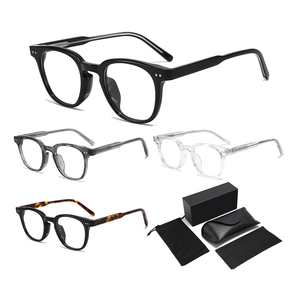
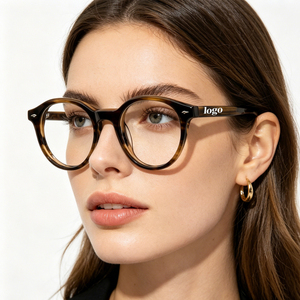
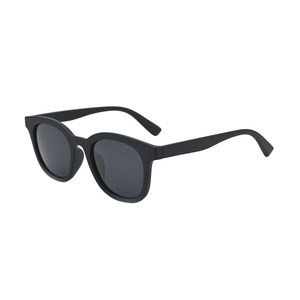
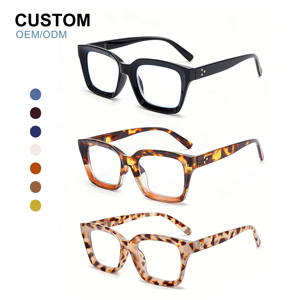
Explore high-turnover optical silhouettes built with virgin Swiss EMS TR90, Mazzucchelli-grade acetate, and anti-allergenic beta-titanium.
Bridging European designer specifications with advanced Chinese industrial automation to supply optical practices and global brands with superior margins.
Pediatric eyewear demands strict chemical inertness. Our plants utilize certified Swiss EMS TR90, food-grade liquid silicone rubber (LSR), and pure nickel-free beta-titanium, complying with REACH, CPSIA, and RoHS standards to guarantee zero dermal toxicity.
Eliminating micro-screws completely mitigates loose-part choking hazards. Our automated molding lines engineer integrally formed, screwless flex-hinges engineered to withstand over 50,000 outward elastic deflections without mechanical fatigue or bridge deformities.
From 3D photopolymer prototyping to cleanroom assembly, our production ecosystem provides end-to-end tooling, pantoscopic tilt adjustment, and custom pad arm integration, delivering boutique European optical refinement at competitive high-volume FOB cost tiers.
Why children's frames cannot be treated as scaled-down adult silhouettes: addressing anatomical growth profiles, visual axis alignment, and vertex distance stability.
In professional optical dispensary planning, children's frames represent the most technically demanding category. Unlike adults who possess fully ossified nasal bridges, pediatric anatomy presents an underdeveloped, cartilaginous nasal crest with a significantly lower and broader bridge width. When independent opticians and optical chains procure frames, standard adult bridge geometry results in slippage, uncontrolled increases in vertex distance, and improper pantoscopic tilt. This directly induces prism imbalances and uncorrected astigmatic aberrations, compromising active amblyopia therapy and myopia progression control.
Modern Chinese manufacturing centers have solved this through anthropometric CAD/CAM modeling. Factory molds integrate 3D inverted saddle bridges and customizable anatomical pad-arms molded from soft medical silicone. These systems distribute the frame weight over a contact surface area 45% larger than traditional separate pads, maintaining stable optical centering even during intense physical activity.
Furthermore, ear crest anchoring in pediatric wearers requires tailored temple curvature. Incorporating ductile core wires inside dual-injected rubber temples permits opticians to adjust the temple tip wrap dynamically without heat guns, safeguarding prescription stability and ensuring child compliance throughout day-long wear.
Structural resilience, safety metrics, and optometric fitting characteristics by base substrate.
| Material Category | Specific Gravity | Tensile Elasticity | Hypoallergenic Grade | Adjustment Flexibility | Optimal Age Demographic |
|---|---|---|---|---|---|
| Swiss EMS TR90 | 1.14 g/cm³ (Ultra-Light) | Exceptional (Memory Flex) | Medical Class VI (Inert) | Cold-Fit / Low Thermal | Ages 3 – 12 (High Activity) |
| Bio-Based Cellulose Acetate | 1.28 g/cm³ | Moderate (Core-wire dependent) | Natural Cotton Fiber Base | Standard Heated Optometric Bench | Ages 8 – 16 (Fashion Optical) |
| Beta-Titanium Alloy | 4.50 g/cm³ (High Strength-to-Weight) | Superior Spring Deflection | 100% Nickel-Free Pure Grade | Precision Plier Manipulation | Ages 10+ (Subtle Profiles) |
| Co-Injected TPEE / Silicone | 1.02 g/cm³ (Ultra-Low Mass) | Maximal (Torsion-Resistant) | Food Contact Compliance | Pre-curved Elastic Straps | Infants to Age 6 (Toddlers) |
Key procurement directions shaping the pediatric market through 2026–2030.
The global surge in pediatric myopia has elevated demand for specialized frames built specifically for defocus incorporated multiple segments (D.I.M.S.) and highly curved therapeutic lenses. Factories must maintain tighter groove tolerances (+/- 0.05mm) to stop lens rotational shifts.
Purchasers increasingly require certified circular accountability. Advanced Chinese plants are transitioning away from petroleum-based phthalate plasticizers to eco-friendly cellulose acetate flakes, plant-derived castor oil polyamides, and closed-loop scrap recycling.
Next-generation pediatric frames incorporate micro-sensor cavities within the temple arm. These non-invasive IoT modules calculate reading distance, ambient lux levels, and cervical posture, notifying caregivers via smartphone apps to protect adolescent vision.
With kids outgrowing frame structures every 8–14 months, modularity allows opticians to swap temple arms, nose saddles, and elastic sport headbands without requiring a full frame replacement, elevating lifetime brand loyalty and repeat store visits.
Critical checkpoints to assess during factory inspections and third-party lab testing.
Frames undergo chamber testing at temperatures from -20°C to +60°C across 95% relative humidity for 72 consecutive hours. TR90 and acetate substrates must display zero surface whitening, cracking, or dimensional deformation exceeding 0.2mm across the optical eye-wire.
ISO 12870 mandates artificial acidic and alkaline sweat exposure tests. Coated surfaces, electroplated components, and printed logos must endure 24 hours of total immersion without blistering, color migration, or micro-corrosion that could cause pediatric dermatitis.
In accordance with FDA 21 CFR 801.410, frame bodies fitted with optical demo acrylics are tested with 16mm steel ball drops from heights of 1.27 meters. Frame joints, rims, and barrel hinges must show zero shatter fracture, protecting developing ocular tissues from blunt trauma.
Direct answers covering MOQs, compliance certifications, tooling costs, and customization lead times.
Access our complete catalog of precision pediatric eyeglass frames, technical CAD specs, raw material compliance documentation, and factory-direct volume pricing.