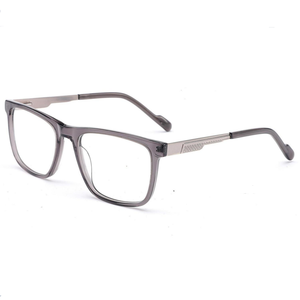
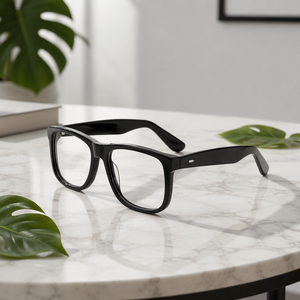
Curated Wholesale Portfolio & Engineering Showcase
Explore our export-ready ready-readers, high-index presbyopic frames, ultra-light TR90 variants, and artisanal Mazzucchelli-grade acetate collections manufactured to EN ISO 12870 & ANSI Z80.3 standards.


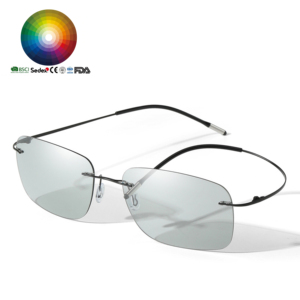
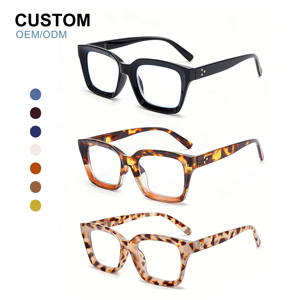
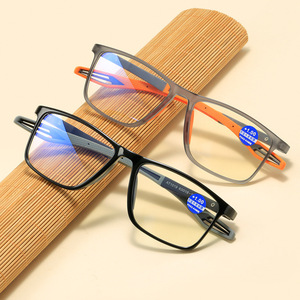
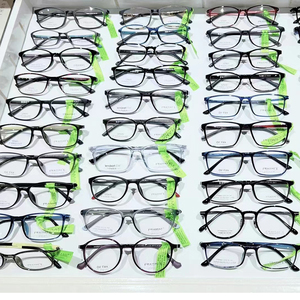
12M+
Annual Optical Exports
≤ 0.2%
Optical Tolerance Defect Rate
85+
Global Destination Markets
ISO:9001
CE, FDA, UKCA Certified
Executive Whitepaper: The Strategic Transformation of China's Reading Glasses Manufacturing
The global reading glasses sector has undergone a profound paradigm shift. Historically regarded as simple non-prescription "magnifiers" relegated to pharmacy spinning racks and convenience counters, readymade reading glasses (presbyopia correctors) have evolved into an indispensable nexus of ophthalmic optics, ergonomic biometric design, and high-fashion accessories. For institutional procurement directors, independent retail chains, e-commerce conglomerates, and optical distributors, identifying an authoritative manufacturing partner in China requires looking far beyond simple ex-factory unit costs.
Modern international import regulations—notably the European Union Medical Device Regulation (EU MDR 2017/745 Class I), the United States FDA 21 CFR 801.410 (Impact Resistance Drop Ball Regulations), and the ISO 16034 / ANSI Z80.31 standards—dictate strict optical performance criteria. Lenses must demonstrate absolute prismatic balance, zero unwanted astigmatic aberration, uniform diopter power gradients across the optical center (±0.06D precision), and robust hinge cyclic fatigue endurance exceeding 25,000 actuations without lateral deflection.
As China's leading reading glasses manufacturer and exporter based out of premier optical industrial zones (Wenzhou, Danyang, and Shenzhen), our enterprise bridges European artisanal craft with high-throughput automated injection and CNC fabrication lines. By utilizing vertically integrated operations—from virgin cellulose acetate curing and mold toolmaking to multi-layer vacuum anti-reflective (AR) lens coating—we provide global B2B buyers with uncompromising quality control, reduced supply chain volatility, and substantial inventory turnover acceleration.
Next-Generation Global Procurement Trends (2026–2030)
How shifting demographic tailwinds, digital lifestyles, and international green mandates are reshaping commercial reading glasses supply contracts.
1. Substrate-Embedded HEV420 Blue-Filtering
Superficial surface coatings are becoming obsolete due to reflective glare and color distortion. B2B procurement has shifted definitively toward monomer-tinted Blue-Cut resins that absorb harmful 400–455nm high-energy visible radiation inside the core lens matrix while maintaining 94%+ visual luminous transmittance for extended screen use.
2. Decarbonized & Bio-Based Acetates
Global retail chains are adapting to strict Corporate Sustainability Due Diligence Directives (CSDDD). We provide ISO 14855-certified bio-acetates crafted from wood pulp and cotton linters using plant-based plasticizers (free of DEP/phthalates), achieving >68% biodegradability within 180 days in industrial composting.
3. Dynamic Diopter Micro-Progressives
Modern consumers transition seamlessly between smartphone distances (33cm), desktop monitors (60cm), and ambient conversational distances (100cm+). Leading buyers are replacing standard single-vision lenses with Degressive/Office Reading Lenses that feature a smooth +0.75D to +1.00D power variation from top to bottom.
Material Science & Structural Engineering Matrix
A procurement professional's baseline evaluation of primary frame substrates, mechanical tolerances, and demographic alignment in high-volume export orders:
| Material Category | Specific Gravity | Tensile / Flexural Strength | Thermal Stability | Ideal Target Market / Use Case |
|---|---|---|---|---|
| Handcrafted Cellulose Acetate | 1.28 – 1.32 g/cm³ | High ductility; customizable wire-core reinforcement | Softens at 65°C – 75°C (Easily adjusted by opticians) | Luxury boutiques, vintage designer series, premium optical practices |
| Swiss EMS TR90 (Grilamid) | 1.00 – 1.04 g/cm³ | Extreme flexural memory, crack-resistant, ultra-elastic | Withstands up to 120°C without warping | Active lifestyle, sports reading, ultra-light daily wear, ergonomic frames |
| Beta Titanium & Memory Metal | 4.45 – 4.51 g/cm³ | Superior strength-to-weight ratio; corrosion proof | Exceptional resistance (>350°C) | Rimless executive styles, hypoallergenic medical applications |
| Optical Grade Polycarbonate (PC) | 1.20 – 1.22 g/cm³ | High impact resistance; structural rigidity | Moderate stability (Up to 90°C) | Promotional, mass-retail blister packs, high-turnover reading kits |
Why Global Optical Brands Choose Us: Enterprise Competence
Backed by decades of optical manufacturing experience, cleanroom lens moulding lines, and dedicated international trade account managers.
Full-Spectrum Quality Audit & Traceability
Every single production batch undergoes rigid optical testing with automated focimeters. We track barrel hinge stability, screw lock tension with anti-drop loctite coating, surface cross-hatch paint adhesion (ASTM D3359), and salt-spray corrosion chamber longevity for up to 72 hours.
In-House CAD Tooling & Prototyping
Accelerate your product launch timeline. Our engineering wing creates photorealistic industrial renderings within 24 hours, functional 3D stereolithography (SLA) prototypes within 72 hours, and high-precision steel extrusion or injection molds within 18 days.
Scalable Logistics & Flexible MOQ Management
Whether you require low-volume, high-turnover Ready-to-Ship (RTS) assortments for regional e-commerce fulfillment, or high-volume bespoke sea container shipments (FOB Ningbo / Shenzhen / Shanghai) with customized packaging, barcoding, and SKU-level bundling.
Frequently Asked Questions (Optical B2B Procurement FAQ)
Essential guidance addressing regulatory compliance, optical standards, supply chain lead times, and private label customization.
Q1: What optical standards and diopter distributions do you support for international shipments?
Our standard production strictly complies with ISO 16034 (Ophthalmic Optics - Specifications for Single-Vision Ready-to-Wear Near-Vision Spectacles) and ANSI Z80.31. We support standard spherical power matrices from +1.00D up to +4.00D in increments of 0.25D or 0.50D. Each lens is verified using computerized lensmeters to ensure the optical center corresponds to standard Pupillary Distances (PD 62mm ± 1mm for unisex readers).
Q2: Can we implement custom private-label branding, laser etching, and tailored retail packaging?
Yes. We offer turnkey OEM/ODM solutions. Our technical capabilities include pad printing, dual-color silkscreen, metallic foil hot-stamping, high-precision inside-temple pad printing, and fiber-laser logo engraving on both frame fronts and lens corners. We also supply complete retail packaging solutions including FSC-certified boxes, thermoformed cases, microfiber pouches, and serialized UPC/EAN barcodes.
Q3: How do you guarantee compliance with FDA, CE MDR, and Prop 65 chemical regulations?
Every shipment is accompanied by complete Declaration of Conformity (DoC) documentation. All materials used in our frames and lenses undergo third-party laboratory verification (SGS, TÜV, or Intertek) verifying compliance with REACH (EC No 1907/2006) for Nickel release, Cadmium, Lead, and Phthalates, alongside California Proposition 65 safety requirements and the FDA Drop Ball Impact Test (21 CFR 801.410).
Q4: What are your standard Minimum Order Quantities (MOQ) and production turnaround cycles?
For custom OEM/ODM production (bespoke frame molds, unique colors, custom logo applications), our MOQ typically begins at 300 to 1,200 pieces per model (divided across 3–4 colorways). Production turnaround averages 35 to 50 days from approved sample sign-off. For Ready-to-Ship (RTS) inventory, dispatch can occur within 5 to 7 business days with low minimum thresholds.
Q5: What anti-blue light technologies do you utilize, and how are they measured?
We supply two core blue-light technologies: AR-Coated Vacuum Anti-Reflective Lenses (reflecting blue rays with a subtle residual violet hue) and Monomer Absorptive Substrates (absorbing up to 40%–60% of 415–455nm blue light with zero distortion). Both types undergo spectrophotometric transmittance validation with complete spectral distribution reports provided upon request.
Q6: What hinge systems do you offer for extended frame longevity?
Depending on price point and market tier, we configure our reading glasses with German OBE spring hinges, standard three-barrel or five-barrel optical riveted hinges, or proprietary screwless flex-hinges in TR90 and titanium frames. All spring hinges undergo tensile and flexural testing to guarantee a minimum lifespan of 25,000 hinge opening and closing cycles without mechanical failure.
Ready to Scale Your Eyewear Supply Chain?
Consult with our senior optical manufacturing engineers today. Request factory audit documentation, comprehensive wholesale price lists, material swatches, and physical pre-production samples.