
Export-Grade Portfolio
High-Precision Optical Frames & Custom Engineering
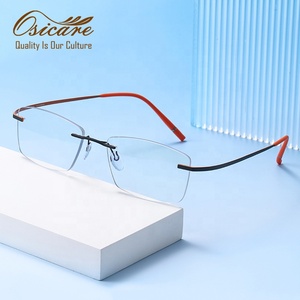
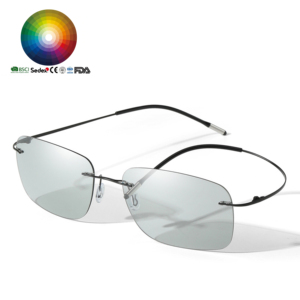
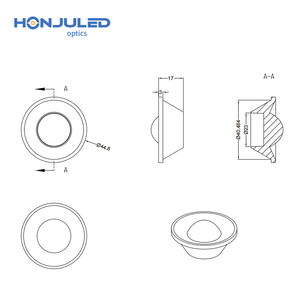
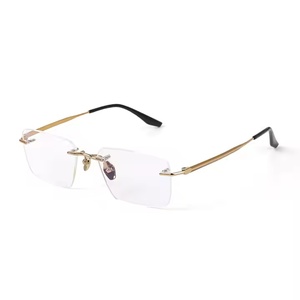
Explore our export-certified optical frames, ultra-light rimless titanium components, and precision PMMA lens assemblies crafted to meet stringent ISO 12870 and CE standards.


Polymer & TR90 Composite

Precision Optical Tech
Enterprise Advantage
Vertically Integrated Industrial Capabilities
Combining time-tested artisan craftsmanship with 5-axis CNC machining, dry tumbling, and strict ISO metallurgical control to support boutique chains and global eyewear brands.
100K+
Monthly Frame Yield
72 Hrs
Tumbling & Polishing Cycle
±0.05mm
CNC Milling Tolerance
100%
Optical Alignment Check
Bio-Based Cellulose Acetate Sourcing
We source ultra-pure flake cellulose acetate synthesized from natural cotton linters and wood pulp. Through specialized plasticizer formulations, our acetate boards exhibit 0% heavy metal migration, superior structural stability, vivid chromatic depth, and skin-friendly biocompatibility matching REACH and FDA regulations.
5-Axis CNC Precision & Custom Wire Cores
Our Shenzhen and Wenzhou machining centers utilize automated multi-axis high-speed CNC routers to mill complex geometric eye-rims, ergonomic nose bridge contours, and intricate step bevels. Custom stainless steel and titanium wire-core shooting ensures high temple elasticity and long-term dimensional retention.
Multi-Stage Barreling & Luster Finishing
Raw-milled frames undergo a rigorous 4-stage, 72-hour mechanical dry and wet tumbling process utilizing organic walnut shells, birch chips, and German polishing paste. Master polishers execute final hand buffing to yield a deep, mirror-gloss luster without rounding razor-sharp design lines or distorting groove profiles.
Industry Whitepaper & Technical Analysis
The Evolution of Acetate Frame Manufacturing (2026–2030)
A comprehensive examination of raw material chemistry, structural hybridization, and international supply chain realignment.
1. Eco-Acetate & Circular Formulation
The global luxury optical sector is phasing out traditional DEP (diethyl phthalate) plasticizers in favor of plant-derived triethyl citrate formulations. Eco-friendly, biodegradable cellulose acetate (certified ISO 14855 compostable) eliminates harmful phthalate migration while maintaining a crystalline refractive index and high tensile resilience against temple bowing.
2. High-Density Thinning Architecture (HD Acetate)
Consumers demand lighter optical hardware without compromising bold silhouettes. High-Density (HD) Acetate technology compresses polymer chains to increase material rigidity by 30%. This enables engineers to mill eye rims down to 2.8mm thickness while preserving total groove retention and preventing thermal frame expansion under summer sunlight.
3. Acetate-Titanium Hybrid Engineering
Independent optical brands are shifting shelf assortments toward multi-material composites. CNC-machined acetate front rings are structurally anchored onto Japanese pure titanium endpieces via laser-welded interlocking rivets. This delivers the warmth and color saturation of organic acetate combined with the zero-pressure flexural comfort of titanium temples.
Quality Control & OEM Mass Production Flow
Phase 01
Curing & De-Moisturizing
Raw acetate sheets undergo 48 hours of low-temperature oven stabilization to eliminate internal stress and prevent warping.
Phase 02
Multi-Axis CNC Routing
Computer-guided milling heads cut lens grooves, front face curves (Base 2 to Base 6), and temple core insertion profiles.
Phase 03
Mechanical Barrel Tumbling
Frames cycle through pumice, beech wood chips, and fine diamond wax compounds across 4 progressive tumbling stages.
Phase 04
Hinge Riveting & QA
German OBE or customized 3-barrel/5-barrel/7-barrel hinges are thermally injected or riveted, followed by bridge stress testing.
| Material Engineering Attribute | Standard Petroleum Acetate | Bio-Based Eco Cellulose Acetate | High-Density (HD) Acetate | Acetate / Beta-Titanium Hybrid |
|---|---|---|---|---|
| Raw Material Origin | Synthetic Cellulose / Phthalates | Cotton Linters + Wood Flakes | Super-Compacted Natural Flake | Natural Acetate + Grade 5 Titanium |
| Tensile Strength (MPa) | 45 - 55 MPa | 50 - 62 MPa | 70 - 85 MPa | 110+ MPa (Structural System) |
| Frame Weight Profile | Standard (26g - 34g) | Moderate (24g - 30g) | Ultra-Light (16g - 21g) | Featherweight (11g - 16g) |
| Thermal Expansion Resistance | Moderate (Requires re-fitting) | High (Retains base curvature) | Exceptional (Zero groove slippage) | Permanent Structural Alignment |
| Primary Market Target | Mass Retail Commercial Lines | Sustainable & European Boutiques | Minimalist Ergonomic Luxury | Bespoke Independent Optometry |
Strategic Procurement Guide
Mitigating Supply Chain Risks in Acetate Eyewear Production
A master framework for optical purchasing directors, brand founders, and wholesale dispensary distributors.
Acetate Plate Aging & Dimensional Stabilization
Uncured acetate sheets hold latent solvents that gradually evaporate over time. If a manufacturer rushes freshly cast plates straight to CNC machines without an extended dehydration annealing cycle (curing for 30–60 days in temperature-controlled chambers), the resulting eyeglass frame will experience splay, temple curling, and lens pop-out within months of arrival at regional warehouses. Always audit your supplier's plate curing protocol.
Hinge Hardware Anchoring & Tensile Rigidity
The structural longevity of premium eyewear hinges on its mechanical connection. Low-grade suppliers rely on direct heat-sink pressing for hinge joints, causing looseness over repeat openings. High-end European and American dispensary standards mandate dual-pinned traditional rivets or ultrasonically embedded 5-barrel / 7-barrel hinges with Teflon-coated screw threads that withstand 20,000 continuous cycle open-and-close fatigue tests without degrading friction.
Lens Groove Geometry & Bevel Fit Consistency
Prescription optical frames must host ophthalmic lenses spanning diverse diopter thicknesses and base curvatures (Base 2 through Base 6). Milling the V-groove depth slightly off-center by even 0.1mm causes asymmetric eyewire stress, leading to lens star-cracking or frame distortion during prescription glazing. We use Japanese computerized optical cutters to verify uniform depth and pitch across 100% of production runs.
Comprehensive Knowledge Base
Frequently Asked Questions by Optical Procurement Teams
In-depth technical answers addressing minimum order volumes, tooling schedules, material certifications, and private-label customization.
What is the typical Minimum Order Quantity (MOQ) for custom acetate eyewear?
For custom bespoke frame designs requiring dedicated multi-axis CNC programming and custom raw acetate color mixing, standard production runs start at 300 pieces per model (divided into 2 to 3 colorways, 100 pieces per color). For in-stock catalog silhouettes or standard black and tortoiseshell colorways, we offer flexible low-volume trial runs starting at 50–100 pieces per SKU to support emerging designer labels.
How does cellulose acetate compare to TR90 and injection-molded plastics?
Injection-molded plastics (such as polycarbonate or nylon) and TR90 are heat-molded polymers. While TR90 is flexible, it lacks dimensional stability, cannot be cold-adjusted by dispensing opticians, and often degrades cosmetically when painted. Cellulose acetate is an organic polymer routed from solid blocks; it allows cold and warm temple bending for custom ergonomic face fitting, offers lustrous hand-buffed finishes, and preserves internal metallic wire cores indefinitely.
What is the standard lead time for prototyping and mass manufacturing?
Rapid 3D CAD modeling and high-precision SLA 3D prototype frames can be delivered within 5 to 7 business days. Fully finished handmade acetate prototype samples (including customized temple core shooting and hand polishing) take approximately 15 to 20 days. Full-scale container mass manufacturing generally requires 45 to 60 calendar days, which includes the mandatory 4-stage tumbling process and internal laboratory drop-ball impact tests.
What international optical certifications and compliance standards do you fulfill?
Our complete manufacturing operation is ISO 9001:2015 and ISO 13485 (Medical Devices) certified. Every finished optical frame, sun lens, and prescription optical component strictly complies with European CE Regulation (EU) 2017/745 (MDR Class I), ISO 12870 standard for ophthalmic frames, US FDA Title 21 CFR 801.410 (Impact Resistance Drop Ball Test), and REACH Annex XVII chemical safety guidelines.
Can you manufacture customized laminated acetate patterns and metal laminations?
Yes. Our multi-layer block-pressing division specializes in thermal diffusion bonding of different colored acetate layers, combining tortoiseshell with crystal backings, architectural color blocking, and sandwiched metal foil layers. We also engineer hybrid acetate fronts with internal titanium reinforcing skeletons and carbon fiber cores for premium private label collections.
What private label branding options are supported on temples and lenses?
We provide comprehensive OEM private label branding technologies including high-precision laser engraving, metallic foil hot stamping, custom core-wire coining, CNC temple tip inlays, epoxy logo flooding, and custom pad printing. Optical demo lenses can be printed with water-based or solvent-resistant anti-counterfeit insignia matching your typography.
Partner With China's Leading Acetate Eyewear Engineering Team
Whether you are developing a new bespoke eyewear collection from hand sketches, upgrading from standard TR90 to premium bio-acetate, or requesting competitive quotations for volume production, our engineering specialists are standing by to review your technical drawings and provide sample prototypes.
Send an Inquiry