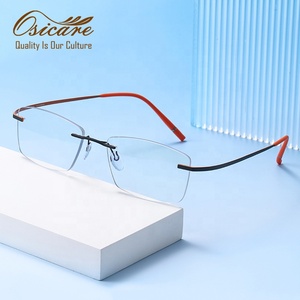
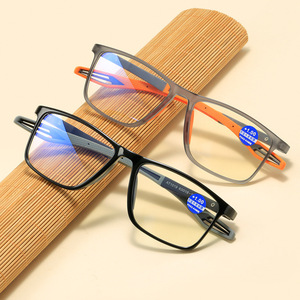
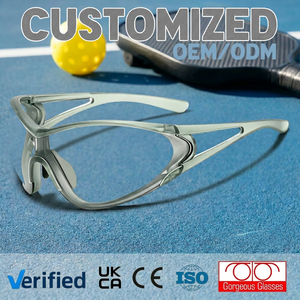
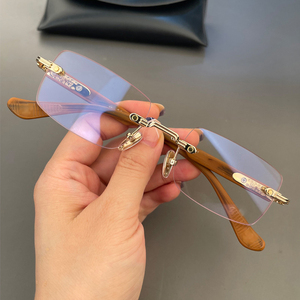
Explore our export-certified optical frames, specialized pediatric designs, ergonomic sports eyewear, and high-clarity prescription optics engineered for brand labels and optical chains worldwide.
Manufacturing children's optical frames demands engineering requirements distinct from conventional adult eyewear. Pediatric facial anatomy evolves rapidly: lower nasal bridge projection, underdeveloped retroauricular cartilages, and dynamic interpupillary distance (PD) require mechanical structures tailored for physical safety, load distribution, and prescription stability. As an established China top children optical frames manufacturer & factory, our facility integrates anatomical research with advanced injection-molding and micro-machining capabilities.
Children undergo critical ocular development where optical center alignment directly impacts vision correction. Ill-fitting frames cause vertical lens decentration, prism induction, and visual fatigue—often prompting non-compliance in amblyopia and myopia management. Our R&D team addresses these challenges with anatomical bridge profiles, 3D splay-angle optimization, and resilient memory polymers (such as Swiss EMS TR90 and medical-grade silicone) to protect facial soft tissue while maintaining clinical optical performance.
| Material Classification | Tensile Yield / Flexural Modulus | Biocompatibility Standard | Optimal Pediatric Application Segment |
|---|---|---|---|
| Swiss EMS Grilamid TR90 | High elastic memory, 1600 MPa | ISO 10993 Non-Cytotoxic, BPA-Free | Infant to Primary (Ages 2–10) daily school wear |
| Pure β-Titanium Wire | Extreme spring deflection, 1050 MPa | Hypoallergenic Nickel-Free Class 1 | Adolescent low-profile rimless & thin profiles |
| Bio-Acetate (Cellulose) | Rigid structural stability, 2100 MPa | Phthalate-Free REACH / CPSIA | High-index prescription beveling, boutique styles |
| Food-Grade Co-Injected Silicone | Shore A 45–60 Durometer | FDA 21 CFR 177.2600 Compliant | Bridge pads, micro-adjustable temple tips, sport hinges |
Our facility complies with global safety protocols, including the US Consumer Product Safety Improvement Act (CPSIA Section 101/108), EU REACH Annex XVII, and ISO 12870 for ophthalmic optics. Every production batch undergoes extensive endurance testing: 20,000-cycle temple flex cycles, bridge impact load testing, sweat corrosion resistance, and non-toxic paint cross-hatch adhesion, ensuring optical distributors receive showroom-ready and clinic-approved inventory.
Strategic procurement planning requires analyzing clinical myopia management trends, biocompatible material shifts, and active lifestyle demands across global markets.
Defocus Incorporated Multiple Segments (D.I.M.S.) and Highly Aspherical Lenslet Target (H.A.L.T.) lenses demand absolute frame stability. Modern frame orders prioritize deeper B-measurements (minimum 28mm–32mm) and minimal pantoscopic tilt (under 4–6°) to ensure stable therapeutic optical zones.
Traditional miniature five-barrel screw hinges risk loosening, small-part aspiration, and facial laceration under physical impact. Leading procurement channels have transitioned to 180°–360° elastic barrel-free hinges and interlocking co-molded silicone joints.
International tenders in Western Europe and North America increasingly demand bio-based circular credentials. We offer bio-based acetate derived from wood pulp and cotton lint with plant-based plasticizers, reducing petrochemical dependency without sacrificing elastic resilience.
Retail inventories optimize SKU efficiency through interchangeable bridge inserts. Instead of holding separate molds for low-bridge and high-bridge anatomies, universal core chassis feature snap-in multi-depth silicone pads, reducing unsold inventory holding costs by up to 28%.
Driven by active school curricula, cross-functional eyewear is accelerating. Hybrid models feature detachable temples that convert quickly into dynamic elastic headbands, blending daily classroom aesthetics with ASTM F803 ball-impact resistance.
Optical chains favor agile manufacturers that provide rapid laser branding, custom PMS color matching, and ready packaging programs with lower MOQs (300–500 pcs per model), reducing time-to-shelf from six months down to 45 days.
Precision tooling, multi-axis micro-machining, cleanroom coating, and end-to-end quality assurance built for independent optical groups and multinational eyewear distributors.
Our dedicated mold department houses 5-axis CNC high-speed milling equipment capable of maintaining ±0.02mm tolerances. We deliver custom pediatric frame prototypes in 7–10 business days and completed high-cavitation steel production tooling within 25 days.
Equipped with computerized electric injection presses (Fanuc/Sumitomo) operating under temperature-regulated cleanrooms, we eliminate material degradation during processing, ensuring consistent polymer chains and long-lasting optical structural integrity.
Our in-house QA lab conducts routine heavy-metal assays, nonylphenol screenings, skin sensitization checks, and nickel-release analysis. Every shipment ships with full raw-material certificates of analysis (COA) supporting CE, UKCA, and FDA medical device compliance.
Addressing essential technical, contractual, safety, and logistical queries for international procurement teams and category directors.
For the US market, children's frames must comply with CPSIA regulations governing total lead content in surface coatings and substrates (<90 ppm) and phthalate restrictions, alongside FDA Class 1 Medical Device registration. For the EU, conformity with EU 2017/745 (MDR), EN ISO 12870, and REACH Annex XVII (nickel release <0.5 µg/cm²/week and azo dyes) is mandatory. We furnish accredited third-party test reports (SGS/Intertek) with every commercial production run.
Children have flatter nasal profiles with lower bridge heights. We integrate custom 3D splay pads with inverted crest angles, widened bearing contact areas, and soft-touch durometer silicone nose pieces. For active toddlers, we engineer adjustable splay-angle pad arms and detachable elastic head straps that anchor frames firmly without applying excess pressure to temporal arteries.
For existing mold collections with customized branding and bespoke colors, our standard MOQ is 300 to 500 units per model, distributed across 2–3 colorways, with delivery in 35–45 days. For bespoke ODM projects requiring custom injection tooling and ergonomic mockups, development takes approximately 25 days for tooling followed by 40 days for initial mass production.
Yes. Our frames feature deep V-bevel lens grooves engineered to securely hold high-diopter lenses without frame deformation. Rim profiles are calculated to conceal lens edge thickness in minus prescriptions, while maintaining flat frame fronts to protect the design geometry required by advanced defocus designs (such as DIMS and HALT).
For infants and toddlers (ages 0–5), we recommend screwless co-injected TR90 with liquid silicone rubber (LSR), offering 360-degree flexibility without metal hardware. For junior and primary school tiers (ages 6–12), pure Swiss EMS TR90 or high-density bio-acetate provides the structural stiffness needed for precise optical centration alongside impact resistance. For teens, ultra-light β-titanium and slim acetate combinations deliver mature styling with lightweight ergonomics.
We support our partners with rapid SLA/SLS 3D functional prototypes within 72 hours for anatomical and fitting evaluations. Additionally, we provide pre-production tooling test shots and physical color swatches for optical board reviews before approving bulk manufacturing runs.
Connect directly with our engineering and export team to request wholesale catalogs, custom OEM/ODM feasibility assessments, and material safety documentation.
Send an Inquiry