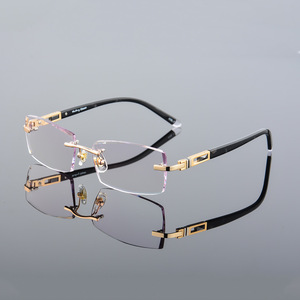
Explore our export-tier OEM/ODM optical frame lines manufactured under strict ISO 9001 and CE certifications, configured for high-end boutique dispensary boards.
The global eyewear landscape demands a transition from traditional mass-assembly lines to micrometer-level precision manufacturing. As a tier-one custom optical frame factory based in China, our operations integrate state-of-the-art Japanese 5-axis CNC machining, ultra-clean electroplating, and proprietary manual polishing processes. Supplying premium private-label distributors, optometric retail chains, and luxury eyewear design houses across North America and Europe, we bridge high-concept design aesthetics with robust structural integrity.
Our infrastructure addresses the critical supply chain friction faced by optical buyers: inconsistent temple tension, premature hinge failure, plating oxidation, and acetate warp. By integrating certified bio-based cellulose acetates and Japanese aerospace-grade beta-titanium wire, our engineering teams ensure that every frame model withstands rigorous barrel tumbling, drop-ball impact tests, and extended 72-hour sweat immersion trials without degradation.
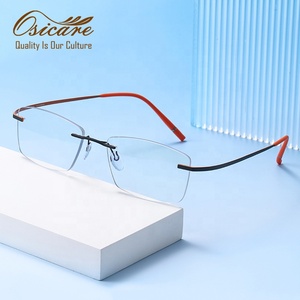
We deploy high-purity Japanese Grade-4 and Beta-Titanium alloys, delivering extreme flexibility and tensile strength while reducing frame weight down to 6.8 grams for rimless and semi-rimless collections.
All acetate flakes are derived from renewable cotton linter and natural wood pulp, plasticized using vegetable-based diethyl phthalate-free agents and cured for 90 days to eliminate frame shrinkage.
Ion-assisted Physical Vapor Deposition (PVD) produces coating thicknesses up to 2.5 microns, offering 5x higher resistance to cosmetic abrasion and atmospheric oxidation compared to wet dip lacquering.
Independent optical buyers and brand procurement officers can benchmark our physical production standards across major frame structural materials:
| Material Classification | Yield Strength (MPa) | Specific Density (g/cm³) | Corrosion Resistance Threshold | Prescription Glazing Suitability |
|---|---|---|---|---|
| Pure Titanium (Grade 4) | 480 – 550 | 4.51 | ISO 12870 Sweat Test Class A (>120 hrs) | Excellent for high minus/plus prescriptions |
| Beta-Titanium (Ti-15V-3Cr-3Sn-3Al) | 880 – 960 | 4.65 | Zero pitting under marine saline exposure | Ideal for flexible, hinge-free rimless mounts |
| Cured Mazzucchelli Bio-Acetate | 65 – 85 | 1.28 | Zero plasticizer bleed; UV 400 stabilized | Optimal for bevel edged high-index lenses |
| Stainless Steel (Medical 304L/316L) | 520 – 620 | 7.93 | Passivated nickel barrier coating | High stability for ultra-thin wire profiles |
Procurement directors in optical retail and distributor networks must align their inventory strategies with emerging demographic shifts and technological evolutions. Over the next five years, eyewear purchasing will be governed by four definitive manufacturing trends:
Global regulatory frameworks (such as the EU Corporate Sustainability Due Diligence Directive) are forcing private labels to abandon petroleum-derived CA. Suppliers must deliver verified life-cycle assessments (LCA) proving carbon-neutral sourcing and biodegradability in soil within 115 days without chemical leach.
The convergence of audio smart-wear and prescription optics requires frame chassis that incorporate internal wire races and micro-battery pockets without expanding temple silhouettes beyond 3.5mm. Selective Laser Sintering (SLS) titanium lugs combined with custom-milled acetate represent the growth sector for tech-lifestyle retail.
High-volume warehousing is yielding to agile, digitally integrated supply pipelines. Brand operators now run 150-piece pilot test runs per SKU to test consumer appetite, utilizing rapid tooling setups to ramp to 5,000 units inside 3 weeks once retail sell-through velocities are proven.
Direct supply relationship with our facility eliminates multiple middleman margins, offering a clear operational bridge to higher gross margins and tighter production control.
From initial 2D hand sketches to 3D CAD rendering, SLA resin printing, functional metal prototyping, and custom toolmaking, our in-house engineering lab reduces design-to-shelf lead time by 45% compared to conventional brokers.
Every frame is inspected across 18 distinct checkpoints: bridge bridge-fatigue, hinge torque (tested to 20,000 cycles), pantoscopic tilt symmetry, rim groove depth uniformity, and high-precision lens cold-snap retention.
We provide comprehensive technical documentation for medical device registrations worldwide, including FDA Device Listing support, EU MDR 2017/745 declarations of conformity, and UKCA compliance portfolios.
Direct technical answers addressing batch quantities, customization capabilities, tooling investments, and logistical parameters.
Initiate direct communication with our chief optical tooling engineers. Discuss technical specifications, request sample sets, or receive a verified bill-of-materials cost breakdown within 24 hours.