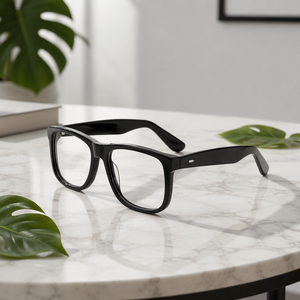
Explore our export-certified optical frames manufactured under ISO 12870 protocols. From hand-carved organic cellulose to screwless surgical titanium, each chassis is optimized for automated robotic glazing and maximum shelf appeal.
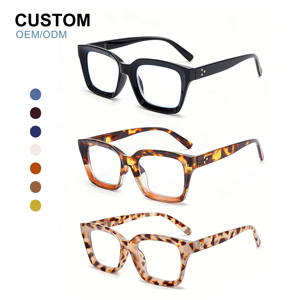
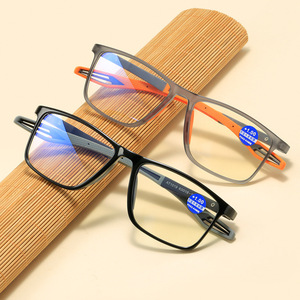
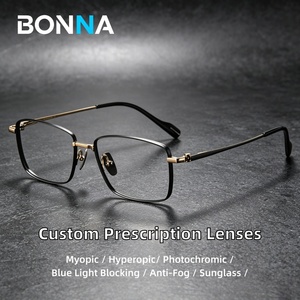
Decoupling supply chain bottlenecks, navigating high-density cellulose curing protocols, and orchestrating private label collections with sustainable, high-margin manufacturing partners.
Global optical retail is experiencing a paradigm shift away from generic injection-molded plastics toward bio-based cellulose acetates derived from cotton linters and wood pulp. Top-tier luxury independent brands demand higher density formulations (specific gravity 1.28–1.32 g/cm³) that undergo rigorous 60-day curing cycles to eliminate volatile plasticizers. This stabilization process prevents shrinkage, maintains pantoscopic tilt stability, and guarantees long-term dimension retention inside high-temperature optical displays.
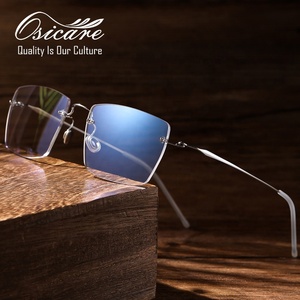
In high-end business and architectural eyewear collections, Japanese and German grade β-Titanium (Ti-15V-3Cr-3Sn-3Al) provides superior yield strength exceeding 980 MPa and an elasticity modulus almost half that of stainless steel. Our manufacturing protocols utilize cleanroom cold-forging and micro-laser welding under pure argon shields. This guarantees zero thermal embrittlement along stress-bearing endpieces, permitting screwless hinge linkages and rimless mountings that weigh under 5 grams.
Exporting to the European Union, North America, and Australasia requires exhaustive metallurgical and polymer certification. Every frame exported undergoes rigorous batch testing: Nickel Release compliance (EN 16128 < 0.5 μg/cm²/week), ISO 12870 mechanical fatigue (500 cycles of bridge expansion), and FDA 21 CFR 801.410 impact resistance testing. We protect optical distributors from customs impoundments, regulatory recalls, and retail consumer liability.
Direct manufacturer capabilities eliminating broker commissions. Discover how our Shenzhen engineering hub and Wenzhou volume facilities optimize your procurement margins.
Our tooling centers house Japanese multi-axis CNC routers capable of sub-0.05 mm repeatability. This allows for intricate three-dimensional facet cutting, custom beveled rim eye-wires, and precision-channeled core wires that allow independent opticians to mount base-curve 2 to 8 lenses without frame deformation.
Rather than relying on superficial chemical sprays, all our acetate frames undergo a proprietary 72-hour mechanical barrel tumbling cycle using graded birchwood granules, walnut granulates, and micro-fine pumice paste. This creates an enduring mirror luster that will not fog, peel, or react to human perspiration over years of clinical wear.
Our titanium and metal frames benefit from high-density Ion Plating (IP) executed in controlled high-vacuum chambers. With plating thickness ranging from 0.8μm to 2.5μm backed by zirconium nitride and ruthenium undercoats, our frames achieve over 72 hours of neutral salt spray (NSS) corrosion resistance.
How independent optometrists, franchise retail chains, and luxury brand creators must recalibrate their inventory strategies over the coming fiscal cycles.
European and North American legislative frameworks (such as the EU Corporate Sustainability Due Diligence Directive) are making recycled and bio-degradable frames a procurement mandate rather than a niche branding luxury. Forward-thinking wholesalers are locking in contracts for ISCC PLUS-certified mass balance acetates and bio-based plasticizers derived from agricultural byproducts, cutting carbon footprints by over 54% per frame chassis.
The traditional requirement of committing to 2,000-piece production runs per SKU is disappearing. Advanced China manufacturers now deploy digital stereolithography (SLA) resin modeling and laser-sintered titanium prototyping. This empowers private-label clients to test physical fitment, nasal splay angles, and pantoscopic incline on live dispensing tables within 10 calendar days before tooling multi-cavity injection or CNC stamping dies.
The boundary between performance sports optics and runway luxury has dissolved. We are witnessing high demand for architectural hybrids: carbon fiber chassis fused with Mazzucchelli acetate faceplates, or surgical titanium rims inset with 0.8mm ultra-thin high-density TR90 wind-rings. These hybrid combinations deliver featherweight structural stiffness suited for high-minus prescription lenses while delivering a distinguished modern aesthetic.
Benchmark mechanical tolerances, typical production lead times, and ideal commercial retail placements across primary optical framing substrates.
| Substrate Category | Density & Weight | Tensile Yield Strength | Typical Tooling Lead Time | Recommended Brand Positioning |
|---|---|---|---|---|
| Milled Cellulose Acetate | 1.28 – 1.32 g/cm³ (Substantial) | 70 – 95 MPa (Flexible / Heat Adjustable) | 35 – 45 Days (CNC Programmed) | Designer Eyewear, Independent Boutiques, Heritage Optical Brands |
| Beta-Titanium (β-Ti) | 4.50 g/cm³ (Ultralight Profile) | 950 – 1,150 MPa (Extreme Elasticity) | 45 – 55 Days (Precision Forged) | Executive Collections, Minimalist Architectural Lines, Medical Tier |
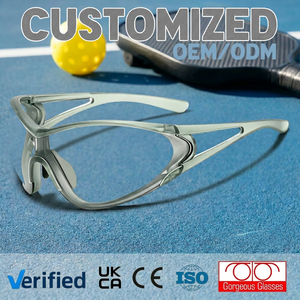
| Swiss Grilamid TR90 | 1.01 g/cm³ (Ultra-Low Density) | 80 – 110 MPa (Impact Resistant) | 25 – 35 Days (Injection Molded) | Sports Athleisure, Ballistic Pickleball Eyewear, Pediatric & Reading Lines |
| Monel / Stainless Steel (304L/316L) | 7.90 – 8.05 g/cm³ (Dense) | 500 – 700 MPa (Rigid Chassis) | 30 – 40 Days (Stamping / Brazing) | Commercial Mass Market, Volume Insurance Assortments, Chain Retail |
| Carbon Fiber Matrix | 1.55 g/cm³ (Featherweight) | 1,200+ MPa (Zero Distortion) | 50 – 60 Days (Autoclave Compression) | High-Performance Luxury, Avant-Garde Statement Runs, Ergonomic Lines |
Direct technical answers addressing minimum order thresholds, surface finish guarantees, proprietary tooling confidentiality, and customs logistics.
For custom private label orders utilizing customized acetate patterns, our standard MOQ is typically 300 pieces per frame shape, which can be divided across 2 to 3 color variants (100–150 pieces per colorway). For titanium collections requiring new stamping or CNC jigging, MOQs typically begin at 300 pieces per model. Ready-to-ship stock models in our catalog can be sampled with significantly lower thresholds starting at 50 pieces.
Dimensional instability is predominantly caused by incomplete acetate curing and unreleased material stress. Our production methodology incorporates a 60-day kiln curing procedure for all raw acetate slabs prior to CNC milling, supplemented by secondary de-stressing annealing cycles between tumbling stages. Frames are systematically packaged in individual desiccated poly-sleeves within rigid multi-ply master export cartons that neutralize humidity and thermal swings across sea and air routes.
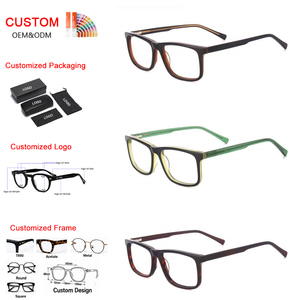
Yes. Our OEM/ODM turnkey production packages include high-precision laser-engraving on the inner temples, customized pad printing, hot-foil foil debossing, customized core-wire extrusion with your brand’s custom filigree artwork, and bespoke acetate temple tips. We also manufacture custom-branded clam-shell hard cases, microfiber lens cloths, and retail presentation packaging compliant with global environmental packaging standards.
Every consignment destined for the United States is accompanied by FDA Device Registration documentation and drop-ball impact test certificates (21 CFR 801.410). For deliveries into the European Union and the United Kingdom, we provide complete Declarations of Conformity under Medical Device Regulation (EU) 2017/745 (Class I medical devices), full ISO 12870 test documentation from independent accredited labs (SGS/Intertek), and certified REACH Annex XVII Nickel Release clearance.
Upon receiving your 2D design sketches, CAD geometries, or reference physical frames, our optical design department generates dimensional 3D CAD blueprints with exact temple lengths, bridge spreads, and pantoscopic tilt specs within 72 hours. We then manufacture functional 1:1 physical prototypes via high-density SLA 3D printing or hand-carved sample acetate within 7 to 10 working days for optician board review and fitting verification.
We execute strict AQL 1.0/2.5 inspection parameters across five defined milestones: raw material spectroscopic inspection (confirming absence of phthalates and heavy metals), post-CNC dimensional verification, tumbling polish surface inspection, structural hinge torque testing, and 100% final cosmetic inspection prior to master boxing. Defective or cosmetically flawed units are sorted and scrapped at the assembly station, guaranteeing pristine zero-defect wholesale shipments.