

Cellulose Acetate
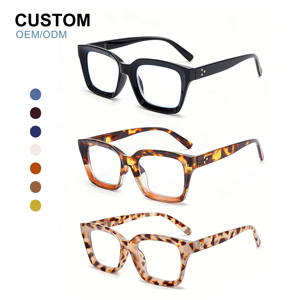
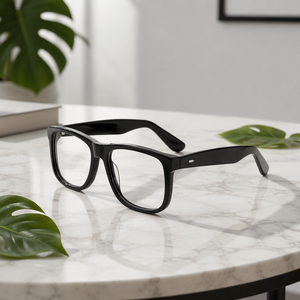
Acetate Glasses Frame Unisex Rectangular Eyeglasses Frame Custom Optical Spectacle Frame for Daily Use Wholesale Bulk Order
Core: Multi-Barrel Wire
Origin: Shenzhen Tier-1
Engineered to bridge high-end European design aesthetics with medical-grade dimensional stability. Fully compatible with automated edging machines, private label silk-screening, and custom board curation.

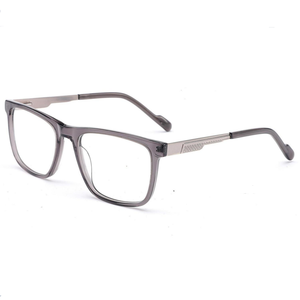
The contemporary global optical supplies market has transitioned from purely transactional contract manufacturing to tightly integrated, high-precision engineering ecosystems. Today's procurement directors, chain store merchandisers, and boutique optical brand owners face unprecedented challenges: margin compression, heightened biocompatibility audits, stringent import compliance frameworks (including FDA Medical Device User Fee Amendments and the EU Medical Device Regulation MDR 2017/745), and the demand for shorter product life cycles without sacrificing mechanical yield.
Within China's primary optical production belts—notably Danyang (Jiangsu) for precision ophthalmic lenses, and Shenzhen and Wenzhou (Zhejiang) for high-grade cellulose acetate and titanium metal frame fabrication—manufacturing protocols have matured drastically. In alignment with sophisticated boutique distributors such as the Villa Eyewear model that balances European design discernment (J.F. Rey, Jos. Eschenbach, L.G.R) with clinical dispensing performance, our domestic factory network delivers structural tolerances within ±0.02mm, providing international buyers with an unmatched competitive moat.
A primary failure point in budget frame sourcing stems from galvanic corrosion, poor weld penetration, and inadequate electroplating adhesion. In professional optical dispensaries, patient returns due to skin-contact nickel dermatitis or hinge breakage degrade clinical authority. To neutralize these risks, our manufacturing clusters have adopted high-frequency induction silver brazing and closed-loop Ion Plating (IP) deposition.
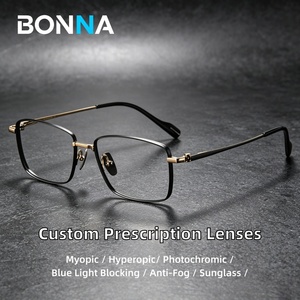
While basic Monel and cupronickel frameworks satisfy low-cost promotional segments, tier-one medical-grade frames leverage Japan-sourced Grade 4 Pure Titanium (Ti 99.2%) for rigid front structures, and Beta-Titanium (β-Ti: Ti-15V-3Cr-3Sn-3Al) for temples. Beta-titanium exhibits a flexural modulus of approximately 100 GPa—nearly half that of standard stainless steel—allowing temples to flex outward under continuous cyclical stress without exceeding their elastic limit or distorting the frame front's pantoscopic tilt.
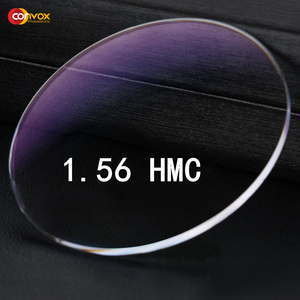
The optical lab industry has evolved beyond conventional diallyl glycol carbonate (CR-39, refractive index 1.499). While standard 1.56 middle-index resin remains a staple for standard inventory, high-minus and complex astigmatism prescriptions necessitate raw monomer innovations that prevent peripheral chromatic aberrations.
By securing direct procurement partnerships with Mitsui Chemicals for genuine MR-8™ (Thiourethane Polymer, 1.60 Index), our lens facilities produce ophthalmic blanks featuring an Abbe value of 41.0 coupled with a high glass transition temperature (Tg > 118°C). Unlike brittle standard resins, MR-8 boasts exceptional impact resistance, surviving the FDA Drop Ball Test (steel ball weighing 16g dropped from a height of 127cm) even when surfaced to an ultra-thin center thickness of 1.1mm—making it the essential substrate for rimless and three-piece drill mounts.
| Substrate / Metric | Refractive Index | Abbe Dispersion Value | Specific Gravity (g/cm³) | Tensile Strength (kgf) | Recommended Frame Geometry |
|---|---|---|---|---|---|
| Standard ADC (CR-39) | 1.499 | 58.0 | 1.32 | 4.5 | Full Rim Acetate / Metal Inlay |
| Mid-Index NK-55 | 1.560 | 35.0 | 1.28 | 5.2 | Standard Full Rim Daily Wear |
| Polycarbonate (PC) | 1.586 | 30.0 | 1.20 | 12.0 | Sports Wrap, Safety Optical |
| Thiourethane (MR-8™) | 1.600 | 41.0 | 1.30 | 11.5 | Rimless Drill Mounts, Semi-Rimless Grooved |
| Ultra-Thin MR-7™ | 1.670 | 32.0 | 1.35 | 10.0 | High Negative Powers (> -6.00D) |
How regulatory shifts, sustainability imperatives, and smart optical integrations are altering sourcing criteria for independent buyers and retail chain operations.
Global distributors are enforcing carbon-neutral mandates. The migration away from phthalate-based plasticizers toward bio-based diethyl phthalate alternatives derived from wood pulp and cotton lint allows frames to achieve 60-day industrial biodegradability while retaining structural tensile resistance and mirror-buff gloss.
Rather than committing to annual container loads that lock up working capital, modern buyers leverage Chinese OEM inventory programs. Utilizing digital warehouse reconciliation, importers place seasonal core orders combined with rapid air-freighted replenishment capsules, preserving liquidity across volatile retail cycles.
With augmented reality (AR) and acoustic audio frames entering mainstream acceptance, mechanical chassis engineering is evolving. Factories must now integrate internal hollow-core titanium wire-ways and heat-isolated temple cavities capable of housing transducers without altering ergonomic center-of-gravity or pantoscopic balance.
The historical divide between bespoke European artisanal eyewear and high-volume Chinese manufacturing has collapsed. Advanced investments in 5-axis simultaneous CNC milling, cleanroom dip-coating, and vacuum chamber ion-assisted deposition (IAD) enable our facilities to execute custom small-batch manufacturing matching the visual depth of handmade Italian acetates while retaining medical-device tolerances.
Traditional stamping techniques introduce internal mechanical stress into cellulose acetate sheets, resulting in post-assembly warpage and lens popping when frames are glazed by dispensary opticians. Our factory standard operates exclusively via multi-axis high-speed milling cutters operating in temperature-controlled environments (21°C ± 1.5°C). Raw cured acetate blocks (seasoned for a minimum of 90 days to release solvent residues) are carved without thermal degradation, achieving precise eye-wire groove angles (standard 110° V-grooves) that guarantee immediate lens retention without manual bench twisting.
Ophthalmic lens durability is determined at the nanometer scale. Uncoated ophthalmic resin loses up to 8% of incident light to surface reflection, degrading visual contrast. Within our Class 100,000 cleanroom environments, lens blanks undergo multi-stage ultrasonic degreasing before being introduced into vacuum box coaters.
Through electron-beam evaporation and Ion-Assisted Deposition (IAD), alternating layers of zirconium dioxide (ZrO&sub2;) and silicon dioxide (SiO&sub2;) are fused onto the substrate, culminating in an oleophobic, super-hydrophobic topcoat. The resulting surface exhibits a water contact angle exceeding 115°, resisting skin sebum, sweat salt crystallization, and cleaning abrasions—tested via steel wool abrasion tests up to 3,000 continuous cycles under 1,000g of vertical load.
Every production batch includes full material test sheets (MTS) for nickel release (EN 16128) and chemical compliance with REACH Annex XVII regulations.
Complete branding customization including laser-etched temple inner cores, pad printing, custom silicone nose pads, and eco-certified packaging suites.
Automated Santinelli and MEI freeform edging lines for turnkey supply: lenses are cut, beveled, and mounted directly into frames prior to container consolidation.
Consolidated bonded warehouse staging, DDP sea-air expedited shipping, and direct integration with North American and European regional distribution hubs.
Clear, authoritative technical answers covering minimum order quantities, compliance thresholds, sampling workflows, and lab tolerances.
For fully bespoke tooling and custom cellulose acetate color lamination, our baseline factory MOQ is typically 300 pieces per model, split across 3 distinct colorways (100 pieces per SKU). For existing open-mold stock models or ready-to-ship titanium chassis requiring custom laser etching or private-label temple tampography, MOQs can be reduced to 50 pieces per SKU, facilitating manageable initial market test runs.
All export-bound ophthalmic lenses undergo statistical lot-based Drop Ball Testing pursuant to 21 CFR 801.410 (Impact Resistance). A 5/8-inch steel ball weighing approximately 0.56 ounces is dropped from a vertical height of 50 inches onto the horizontal upper surface of the lens blank. Full certification records, test certificates, and FDA Registration / Device Listing numbers are provided with each commercial export dossier.
Inexpensive anti-blue light lenses utilize an external surface interference film that merely reflects 10%–15% of high-energy visible (HEV) blue light, which often creates an unwanted purple or blue flash on camera. Our export-grade lenses utilize monomer-absorbed chemical absorbers (UV420 technology) compounded directly into the resin matrix prior to thermal polymerization, filtering out 100% of harmful UV up to 400nm and over 40% of HEV blue light between 415nm and 445nm without severe yellow color cast.
Frames are subjected to automated cyclical endurance testing compliant with ISO 12870 (Ophthalmic optics — Spectacle frames). Spring hinges and barrel assemblies must endure 500 complete open-and-close cycles per temple side at a regulated frequency without loosening the hinge screw torque by more than 30%, exhibiting structural cracking, or demonstrating temple alignment distortion greater than 2.0mm.
Yes. We work closely with both imported Italian Mazzucchelli acetate sheets and top-tier domestic custom extrusion partners (such as Jimei and Jinbiao). We can formulate custom block laminations, multi-layer color fusions, and vintage tortoiseshell patterns based on Pantone color codes, physical target swatches, or 3D digital renderings, matching chromatic transparency and depth.
For functional CNC prototypes (using hand-shaped acetate or laser-sintered titanium mockups), sampling takes 15 to 20 business days. Following formal pre-production sample (PPS) sign-off, full production runs require 45 to 60 calendar days for acetate frameworks and 60 to 75 days for precision electroplated titanium frames. Stock ophthalmic semi-finished and finished lenses ship within 7 to 10 days.
We operate under ISO 2859-1 (AQL Level II) inspection standards. Critical defects (e.g., sharp burrs, stripped hinge screws, lens optical center deviation exceeding ANSI Z80.1 tolerances) carry an AQL limit of 0. Major defects (e.g., cosmetic plating discoloration, slight temple splay asymmetry) are capped at AQL 1.5, while minor cosmetic defects hold an AQL 4.0 ceiling.
Bridge joint failure is typically caused by insufficient solder flow or localized metal embrittlement during manual torch welding. We utilize computer-controlled high-frequency induction brazing in an inert argon shield atmosphere. This process guarantees 100% circumferential filler alloy penetration at controlled temperatures, preventing carbonization and maintaining tensile fatigue resistance.
Yes. Spectacle frames and non-corrective sunglasses are categorized as Class I Medical Devices or Personal Protective Equipment (PPE) respectively. Our technical documentation dossiers include declarations of conformity, biocompatibility risk assessments (ISO 10993 cytotoxicity and skin irritation profiles), and full factory audit records under ISO 13485:2016 management systems.
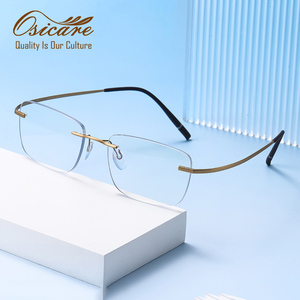
Delicate titanium rimless assemblies are packaged with custom high-density molded EVA bridge clips and temple sleeves, packed into individual static-free polybags, boxed in groups of 10 or 12 in rigid chipboard inner boxes, and nested inside heavy-duty 5-ply corrugated export cartons reinforced with corner edge protectors and moisture-proof desiccant packs.