Global OEM / ODM Precision Eyewear Engineering

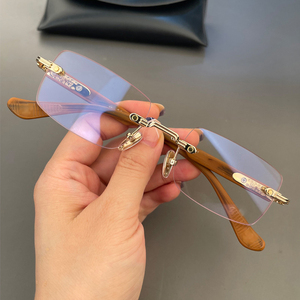
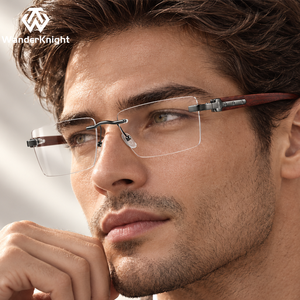
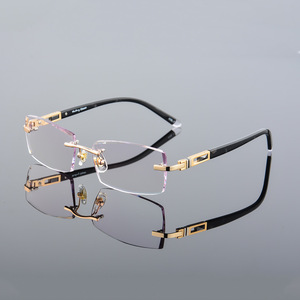
Custom OEM Rimless Optical Frames Supplier & Suppliers

Precision CNC Machining, Ultra-Lightweight Beta-Titanium Architecture, and Comprehensive B2B Frame Board Solutions for Global Optical Brands & Independent Practitioners

0.02 mm
CNC Drill Hole Tolerance
< 2.8 g
Ultra-Light Bare Frame Mass
500,000+
Hinge Cycle Flex Life
100% ISO
12870 Compliant QC Standards

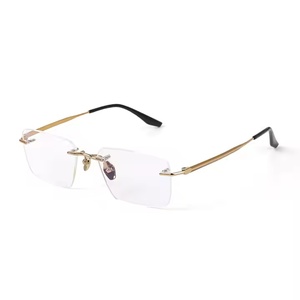
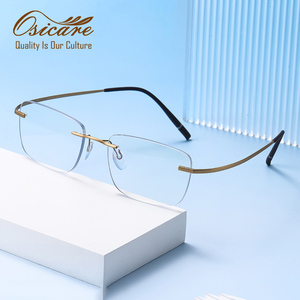
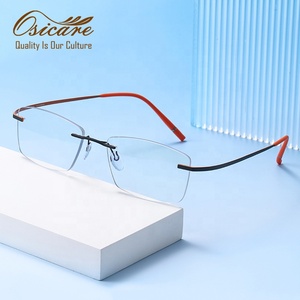
Precision-Engineered Rimless Optical Collections

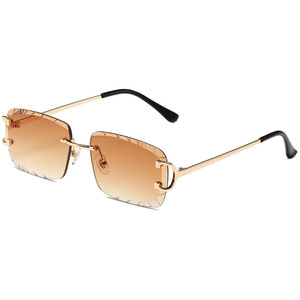
Curated frameless architectures fabricated from surgical-grade Beta-Titanium, memory alloy, faceted diamond crystal cuts, and sustainably sourced natural organic materials.

Why International Eyewear Brands Partner With Our Foundries

Direct-from-manufacturer precision engineering delivering aerospace tolerances, advanced vacuum ion plating, and bespoke private label turnkey assembly.

Aerospace Grade Beta-Titanium

Our raw material sourcing complies strictly with ASTM B348 Grade 5 Ti-6Al-4V and high-modulus Japanese Beta-Ti alloy. This guarantees an ultra-high strength-to-weight ratio, complete biocompatibility (100% nickel-free), and unparalleled elastic fatigue resistance.

  • Young's Modulus: 110 GPa for superior temple spring back
  • Tensile Strength exceeding 950 MPa to prevent bridge distortion
  • Zero skin-sensitizing allergen emission for sensitive patients

Sub-Micron 5-Axis CNC Precision

Rimless frames demand absolute geometrical exactitude. Our German and Japanese 5-axis CNC machining centers drill, mill, and slot bridge mounts and temple end-pieces with dimensional tolerances within ±0.02 mm, eliminating mounting stress cracks.

  • Consistent drill-hole depth prevents loose compression plugs
  • Zero-chatter facet polishing for diamond-cut decorative edges
  • Rapid CAD/CAM tooling conversion in under 7 business days

Multi-Layer PVD Ion Plating

Our physical vapor deposition (PVD) magnetron sputtering processes deposit titanium nitride, chromium carbide, and real 24K gold nano-coatings up to 2.5 microns thick, far exceeding conventional wet-barrel electroplating durability.

  • 96-hour continuous neutral salt spray resistance (ISO 9227)
  • Wear-resistant coating hardness rating up to 2200 HV
  • Anti-sweat corrosion barrier for tropical retail territories

Universal Edging Lab Compatibility

Every OEM rimless batch includes full digital drill-chart coordinates (OMA format compliant) compatible with major edging systems including Essilor, Nidek, MEI, and Briot, reducing optical lab dispensary assembly time by 45%.

  • Pre-calibrated compression bushing retention components
  • Consistent bridge angle spread reduces dispensing adjustments
  • Zero optical distortion stress verified under polariscope inspection

Stringent ISO 12870 Quality Assurance

Each production run undergoes comprehensive mechanical fatigue and climate testing. From spring hinge endurance to bridge torsion and perspiration immersion, our internal QA protocols guarantee zero field returns.

  • 50,000-cycle temple flexion test without hinge looseness
  • Bridge deflection resistance exceeding 50 N static tensile force
  • Thermal shock cycling from -20°C to +65°C without deformation

Private Label & White-Glove Support

Reflecting the highest standards of boutique eyewear supply, our dedicated OEM engineering managers provide comprehensive brand incubation: custom laser logo engraving, luxury packaging fabrication, and regional market exclusivity options.

  • Flexible MOQs starting at 300 pieces for bespoke architectures
  • Turnkey temple tip customization (Acetate, Wood, Titanium)
  • Expedited DDP air logistics with real-time tracking

Comprehensive Structural Alloy Comparison Matrix

A rigorous evaluation of metallurgical properties, processing tolerances, and dispensing performance across optical-grade frameless chassis substrates.

Alloy / Substrate Tensile Strength (MPa) Elastic Spring Back Weight (Bare Frame) Corrosion Resistance Recommended Lens Diopter
Beta-Titanium (Ti-15V-3Cr-3Sn-3Al) 980 – 1150 Exceptional (98.5%) 2.2 – 2.8 grams Impervious to salt & sweat Plano to -10.00 / +6.00D (High Index MR-8)
Pure Titanium (Grade 2 JIS) 450 – 580 Moderate (Rigid) 2.6 – 3.2 grams Total Biocompatibility Plano to -8.00 / +5.00D
Memory Nickel-Titanium (Nitinol) 850 – 1000 Ultra-High Superelastic 3.1 – 3.6 grams High (Passivated Surface) Plano to -6.00D (Active Lifestyle)
Corrosion-Resistant Monel/Alloy 480 – 620 Standard Elastic 4.5 – 5.8 grams Requires Multi-PVD Barrier Plano to -5.00D
Carbon-Core Natural Sandalwood N/A (Composite) Rigid Geometric Stability 5.2 – 6.8 grams Organic Wax Sealed Plano to -6.00D (Luxury Statement)

Overcoming Mechanical Failure in Rimless Optical Mounting Systems

Advanced structural considerations for ophthalmic dispensing labs and OEM procurement directors.

1. The Physics of Stress Distribution in Frameless Drilling Architectures

In standard full-rim acetate or wire-rim spectacle frames, peripheral mechanical shear and bending stresses are absorbed circumferentially by the eye-wire groove. In contrast, rimless and three-piece drill mount optical frames transfer 100% of torsional, flexion, and impact loads directly to the interface between the lens substrate and the metallic anchor pins.

Our OEM manufacturing protocols specifically counter this localized stress concentration through three structural innovations: Dual-step CNC drilled flanged anchor pins, micro-elastomeric compression bushings (fabricated from proprietary Shore 85A polyurethane), and graduated pressure-release bridge bars. When torque is applied during patient cleaning or single-handed frame removal, the elastomer micro-deflects up to 0.15 mm, dampening impact energy that would otherwise cause star-cracking or catastrophic cleavage in brittle polycarbonate or high-index 1.67 and 1.74 polyurethane resin lenses (such as Mitsui MR-7 and MR-10).

Optician Lab Guideline: Always maintain a minimum edge thickness of 2.2 mm at the drill point when edging minus lenses. For high plus lenses, specify high-modulus MR-8 (1.60 index) or Trivex substrates to guarantee pull-out shear strength exceeding 120 N.

2. Friction-Fit Screwless Hinges vs. Micro-Torx Threaded Fasteners

A perennial dilemma for optical chain buyers and private label optical brands is temple hinge durability. Traditional threaded micro-screws (typically M1.0 to M1.4) are susceptible to thread stripping, vibrational backing-out, and localized cross-threading during dispensing adjustments.

Our foundry offers two distinct, high-reliability hinge architectures:

A. Monoblock Screwless Friction Cylinders: Utilizing high-tolerance CNC-coiled Beta-Titanium leaves, this hinge functions entirely without screws or pins. The tension is calibrated via metallurgical geometry, maintaining consistent temple opening resistance (120 to 150 gf·cm) even after 50,000 continuous articulation cycles. Zero maintenance is required by the retail optician.

B. Nylon-Sleeved Micro-Torx Fastening: For collections demanding traditional luxury temple silhouettes, we employ high-tensile 316L stainless steel Torx star-drive screws fitted through self-expanding DuPont Delrin sleeves. The Delrin collar prevents direct metal-on-metal friction, permanently inhibiting the common issue of loose frame temples while preserving effortless field adjustments.

3. Precision Diamond-Edge Faceting and Prismatic Aesthetic Engineering

The contemporary resurgence of luxury rimless eyewear—popularized across major European optical boutiques and North American metropolitan practices—heavily highlights diamond-cut faceted lens perimeters. Our factory coordinates directly with optical lens edging centers to supply computerized DXF/CNC drill and bevel toolpaths.

By applying a 45-degree or multi-tier prismatic bevel along the upper temporal and nasal edge boundaries of 1.60 or 1.67 MR-8 lenses, ambient light is internal refracted to create a radiant crystal-like contour. When paired with our custom vacuum-deposited gradient grey, champagne, or rose tints, the resulting eyewear transitions seamlessly between a medical vision corrective device and an artisanal jewelry-grade statement piece.

Future Procurement Trends in Rimless Eyewear (2026–2030)

How shifting demographic demands, progressive lens adoption, and advanced material science are redefining wholesale purchasing strategies.

The "Quiet Luxury" Resurgence

Consumers are transitioning away from heavy, overt acetate logos toward understated, technical minimalism. Ultra-thin titanium wireframes and rimless profiles represent the quintessential "stealth wealth" aesthetic, commanding retail price points upwards of $450 to $750 in boutique optical dispensaries.

Custom Lens Shape Tailoring

Unlike fixed-rim frames, rimless frames allow opticians to modify lens geometry (widening the B-measurement for progressive corridors or altering the nasal shape for high cheekbones) without retooling. OEM buyers are increasingly ordering universal titanium chassis kits that allow in-clinic custom shape customization.

Hybrid Bio-Acetate & Natural Accents

The convergence of biocompatible titanium with organic accents—such as sustainably harvested sandalwood, buffalo horn tips, and Japanese bio-cellulose acetate temple sleeves—is capturing high-tier market share. Buyers utilize these hybrid materials to diversify their frame boards without sacrificing featherweight ergonomics.

Frequently Asked B2B Technical Questions

Clear, direct answers regarding custom tooling, tolerances, optical lab assembly, and private-label ordering parameters.

What are the minimum order quantities (MOQ) for custom OEM rimless optical frames?
Our standard production MOQ for custom OEM private-label rimless frames is 300 pieces per model, which can be divided across up to 3 anodized or PVD plated colorways (e.g., 100 pcs IP Black, 100 pcs IP Rose Gold, 100 pcs Raw Satin Titanium). For bespoke tooling requiring unique bridge dies or proprietary screwless hinge mechanisms, prototype runs of 100 pieces can be arranged subject to tooling amortization agreements.
Which ophthalmic lens substrates perform best with your rimless drill mount chassis?
We strongly recommend Mitsui Chemicals MR-8 (1.60 index) as the baseline standard for rimless mounting due to its exceptional tensile strength, impact resilience, and high Abbe value (41). MR-7 and MR-10 (1.67 index) are also fully validated for high minus prescriptions. Standard CR-39 (1.50 index) and brittle 1.56 middle-index resins should be avoided for drill mount frames due to high notch sensitivity and fracture risk around drill holes. Polycarbonate and Trivex are also 100% compatible.
Do you supply digital drill charts and CAD data for optical edgers?
Yes. Every OEM frame model is shipped with complete digital data files, including OMA/VCA standard drill files, DXF lens contour schematics, and 1:1 scale printable drilling reference charts. These allow automatic coordinate importing into modern edgers from Nidek, Essilor, MEI, Briot, and WECO, eliminating manual caliper measurement errors in your finishing lab.
What surface treatment methods do you use to prevent metal tarnishing and skin irritation?
All our metal frames utilize advanced vacuum Ion Plating (PVD) inside cleanroom chambers. Unlike traditional chemical dip-plating, PVD forms a molecular-level bond between the titanium substrate and the coating layer. The finish exhibits an abrasion resistance of over 2,000 Martindale cycles, withstands 96 hours of salt-spray testing without blistering, and is guaranteed 100% nickel-free and hypoallergenic in compliance with REACH Regulation (EC) No 1907/2006.
Can we customize frame temple geometry, ear tips, and nose pads with our company logo?
Absolutely. Turnkey private label customization is our core competency. We offer fiber-laser micro-engraving on the inner bridge, temple core, and rimless hinge leaf (precision down to 0.1 mm letter height). Furthermore, we can mold custom-branded silicone nose pads, titanium coin-inlay nose pads, and acetate or natural horn temple tips hot-stamped with your house trademark.
What is the typical production lead time from CAD approval to global dispatch?
Rapid 3D SLA resin prototyping and CNC brass functional fit samples are delivered within 10 to 14 business days. Following physical sample approval and master tooling sign-off, bulk production requires approximately 45 to 60 days depending on the complexity of PVD plating and custom temple components. Expedited repeat orders for catalog chassis are dispatched within 25 to 30 days.
How do your rimless frames maintain bridge stability and prevent loosening over time?
We employ a dual-point anti-rotation mounting system. Instead of single-pin drill mounts which rotate over time, our bridges use either twin compression pins with flanged dual-sleeve bushings or a keyhole stabilization tab. This prevents any rotational play between the lens and the bridge bar, ensuring the optical centers (OC) and pupillary distance (PD) remain medically accurate throughout daily patient wear.
Do your manufacturing facilities comply with international medical device standards?
Yes, our foundries operate under certified ISO 9001:2015 Quality Management Systems and ISO 13485 (Medical Devices). Our frames comply fully with ISO 12870 (Ophthalmic Optics - Spectacle Frames) and EU Medical Device Regulation (MDR 2017/745) Class I requirements, and we supply full Declarations of Conformity (DoC) and FDA registration data for international customs clearance.
Direct Manufacturer Inquiries

Start Your Custom OEM Optical Frame Production

Connect directly with our senior eyewear engineering team to discuss CAD drawings, material selection, wholesale volume tier pricing, or bespoke private label sample requests.

Contact Us