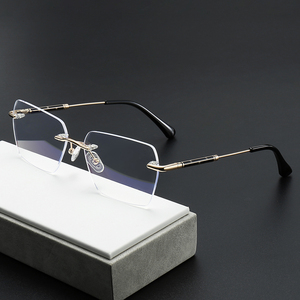
Explore high-performance bespoke eyewear frameworks, engineered titanium chassis, and blue-light attenuating substrates crafted for global dispensary excellence.

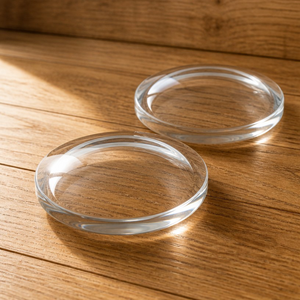
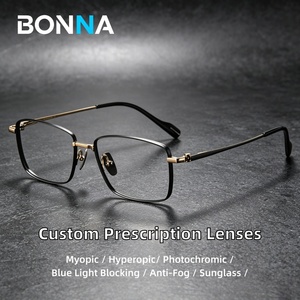
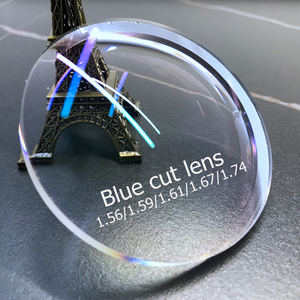

A comprehensive examination of raw material metallurgy, volumetric acetate cured stability, and optical dispensary economics.
Utilizing high-purity Grade 5 and Beta-Titanium alloys allows cold-drawing down to ultra-fine temple diameters with unmatched tensile memory. This completely mitigates temporal pressure points while surviving 20,000+ cyclical flex stresses under strict ISO 12870 parameters without fatigue fracture or micro-fracture along soldering points.
Unlike commercial injection plastics, bespoke acetate production requires prolonged kiln curing for 60 to 90 days. This evaporates residual solvents and plasticizers, permanently neutralizing frame shrinkage, bridge warping, and face-form deformation when high-cylinder prescription lenses are edged into place.
Friction-fit, screwless hinge architectures prevent loose eyewires and stripped temple threads. Machined via multi-axis micro-CNC routers down to ±0.015mm tolerance, these assemblies provide smooth kinetic tension without lubricants that degrade over time.
Systematic matrix comparing custom optical chassis substrates across density, tensile yield, thermal stability, and dispensary adjustability.
| Substrate Category | Density (g/cm³) | Elastic Memory (%) | Corrosion Resistance | Dispensary Adjustability | Target Prescription Range |
|---|---|---|---|---|---|
| Japanese Beta-Titanium | 4.43 | 99.2% (Cold Bend) | Immune to Perspiration/Salts | Requires Specific Pliers | High-Minus & Progressive Fits |
| Block Cellulose Acetate | 1.28 | 85.0% (Viscoelastic) | High (Solvent Vulnerable) | Optimal with Frame Warmer | Full Diopter Spectrum (+8 to -12) |
| Medical Grade TR90 | 1.14 | 98.5% (High Flex) | Impervious to Chemicals | Limited (Cold Shape Setting) | Standard Active & Pediatric |
| Monel / Nickel Silver Alloy | 8.80 | 62.0% (Rigid Yield) | Dependent on Electroplating | Instant Manual Adjustment | Cost-Driven Fashion Baseline |
Key technological, regulatory, and supply chain shifts redefining how boutique practices and multinational distributors select custom frame vendors.
Direct Metal Laser Sintering (DMLS) and Selective Laser Sintering (SLS) enable on-demand custom geometries without expensive molds. This allows private-label brands to commission micro-runs of 50 to 100 units per colorway, cutting prototype cycle times from six months to two weeks.
Global environmental mandates, including stringent European packaging and chemical directives, are pushing acetate suppliers toward bio-based diethyl phthalate substitutes. Modern cotton-linter and wood-pulp matrices offer clarity and polishing brilliance comparable to traditional petro-acetates while achieving true optical biodegradability.
Facial photogrammetry and 3D intra-dispensary scanning are shifting procurement from static base-curve chassis to parametric frame architectures. Bridge spans, pantoscopic tilt, and temple flare angles can now be adjusted programmatically within the CAD workflow prior to multi-axis milling.
Operating at the intersection of European designer aesthetics and robust production supply chains, we provide our partner dispensaries with sustained retail advantages.
We work exclusively with independent optometry practices, clinical dispensaries, and boutique opticians. By avoiding mass big-box retailers, your practice retains strict regional territory protection and price integrity across every board position.
With operational headquarters in Glen Cove, New York, our partners bypass international customs bottlenecks and foreign exchange volatility. We provide immediate parts fulfillment, direct warranty processing, and real-time optical account consulting.
Every batch shipped from our partner facilities comes with certified batch documentation, ISO 12870 mechanical safety compliance, REACH non-toxicity validations, and optical center verification for frictionless glazing.
Critical operational answers for opticians, clinic directors, practice managers, and supply chain buyers.
Connect directly with our engineering and procurement specialists to access comprehensive frame catalogs, schedule a regional rep presentation, or request bespoke manufacturing quotes.
Inquire Now