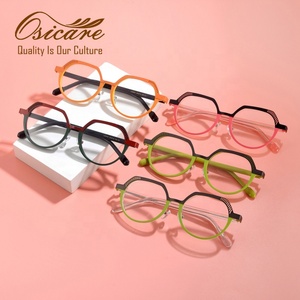
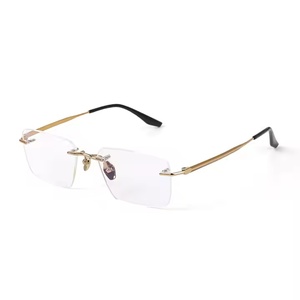
Explore commercial-grade optical assemblies, hypoallergenic stainless steel balances, aerospace titanium mounts, and high-transmission ophthalmic lenses engineered for global boutique retailers and brand distributors.
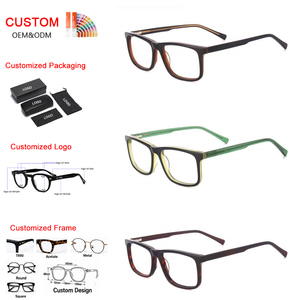
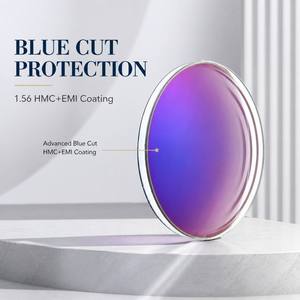
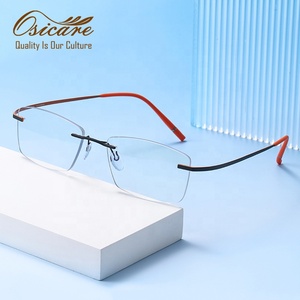
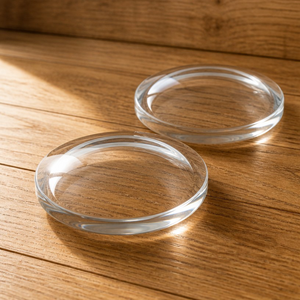
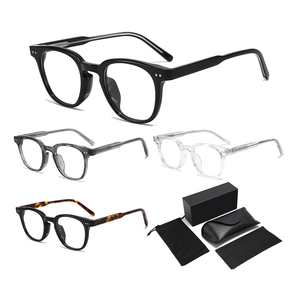
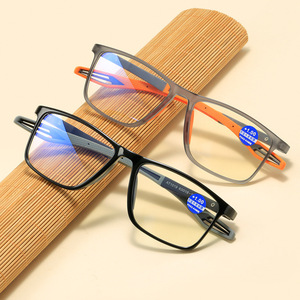
Evaluating international original equipment manufacturers (OEM) and tier-one frame suppliers requires looking past aesthetic surface finishes into metallurgical integrity, electro-deposition coatings, and physical stress mechanics.
Global export leaders utilize medical-grade AISI 304L or 316L austenitic stainless steel. High chromium (16-18%) and nickel-molybdenum contents deliver robust yield strength (over 500 MPa), allowing frame profiles as narrow as 0.7mm without structural sagging, cold deformation, or bridge drift under severe prescription lens tensions.
Outdated barrel electroplating is superseded by Physical Vapor Deposition (PVD) in vacuum cleanrooms. Applying Titanium Nitride (TiN) or Diamond-Like Carbon (DLC) produces layer thicknesses between 0.3 and 1.2 microns. This layer endures over 72 hours of neutral salt spray testing (ISO 9227) without micro-flaking or surface blistering.
Modern frame architecture depends on continuous, high-speed 5-axis CNC stamping and milling. Eliminating excessive heat concentration preserves the austenite crystal orientation of cold-rolled stainless sheets, preventing metallurgical brittleness around eye-wire closures, nose pad junctions, and temple flex zones.
B2B retail procurement managers must assess regional industrial clusters based on production capacity, tool-and-die precision, minimum order quantities (MOQ), and metallurgical compliance.
Recognized globally as the premier manufacturing center for high-end optical exports, producing luxury-tier stainless steel, β-titanium, and hybrid acetate-metal frames.
The epicenters of massive, efficient eyewear production, providing scalable private-label programs, value-engineered opticals, and consolidated logistics.
Historic European and Japanese artisanal districts serving luxury flagship labels, focusing on bespoke styling and labor-intensive manual polishing.
Strategic purchasing managers are updating their technical specifications to reflect changes in consumer ergonomics, regulatory standards, and sustainable metallurgy.
Traditional barrel hinges with standard micro-screws remain common points of failure for independent retail consumers. Modern procurement targets friction-locking, screwless sheet-metal hinges cut directly from flat spring stainless steel. This design eliminates mechanical loosening, reduces warranty return rates by up to 34%, and provides a modern, clean industrial look.
Major corporate optometry retail brands face growing pressure to comply with ESG reporting directives (such as the EU Corporate Sustainability Due Diligence Directive). Forward-thinking exporters now provide verified closed-loop recycled stainless steel (minimum 60-80% post-consumer scrap), tracking energy consumption per batch without sacrificing tensile flexibility.
Modern frame boards require tactile and structural balance. Advanced manufacturers are combining lightweight 304L stainless chassis with bio-cellulose acetate and bio-based TR90 eye-rim inserts. This hybrid approach lets optometrists mount high-minus prescription lenses safely while keeping the front chassis slim, rigid, and light.
Addressing the technical, regulatory, and logistical questions commonly encountered by optical procurement teams.
Under REACH Annex XVII and EN 1811:2011+A1:2015, all eyewear components in direct, prolonged skin contact must release less than 0.5 μg/cm²/week of nickel. Reliable exporters use austenitic 316L medical stainless steel coated with an electro-deposited or PVD barrier layer. Every export batch must include independent test certificates from accredited labs like SGS, Intertek, or TÜV Rheinland.
Traditional monel (copper-nickel-zinc) alloys are easy to solder, but they release high levels of nickel and are prone to green verdigris corrosion from human sweat. Stainless steel delivers higher tensile strength, exceptional corrosion resistance, and stable elastic memory. This lets designers build frames that are up to 40% thinner and lighter without warping over time.
A rigorous factory pre-shipment audit follows ISO 2859-1 (Level II Sampling) and includes: (1) Dimensional cross-checks using non-contact optical projectors, (2) 50,000-cycle temple flex endurance tests, (3) Cross-hatch tape adhesion tests (ASTM D3359) on PVD coatings, (4) 24 to 72-hour synthetic perspiration and salt-fog immersion tests, and (5) Polarized stress analysis of lens eyewires.
Lens ejection or glazing distortion happens when cold-stamped eyewires have uneven internal stress. Tier-1 suppliers use CNC roll-forming followed by stress-relief thermal annealing. They also verify that the eyewire V-bevel matches the standard 115-degree ophthalmic edging angle. This ensures prescription labs can edge CR-39, polycarbonate, or 1.60 MR-8 lenses smoothly without pinching the optics.
Initial 2D mechanical drawings and 3D CAD modeling take 3 to 5 business days. Rapid SLA prototypes and CNC brass models are ready in 7 to 10 days. Fully hardened stainless steel die-stamping molds take 30 to 45 days, with tooling fees averaging $400 to $1,200 per model depending on hinge and eyewire complexity. Mass production runs typically ship within 45 to 60 days after prototype sign-off.
A balanced optical dispensary board typically allocates 40% to lightweight stainless steel and titanium (suited for modern professional and minimal styles), 40% to expressive block acetate (for bold colors and classic styles), and 20% to performance materials like TR90, Ultem, and rimless designs. This mix covers varied facial fits, bridge anatomies, and lens prescription weights.
Combining modern industrial manufacturing with specialized boutique service to support reliable frame distribution for global optical brands.
Our engineering division uses in-house CAD/CAM tooling and multi-axis CNC machines to shorten the path from initial design to market. We turn technical sketches into fully testable, polished stainless steel prototypes in under 12 days, helping our partners hit their seasonal collection launch dates reliably.
Every production batch is certified against EN ISO 12870, ISO 14889, and US FDA 21 CFR 801.410 standards. On-site metrology equipment tracks hinge torque resistance, chemical nickel release rates, paint adhesion under ultrasonic cleaning, and drop-ball impact safety before anything leaves the facility.
We work with independent optical practices, international retail chains, and e-commerce labels worldwide. With dedicated inventory management, custom private labeling, and flexible MOQs starting at 300 units, we make premium eyewear manufacturing accessible to growing businesses.