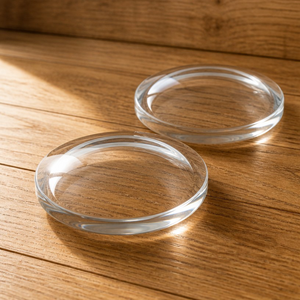
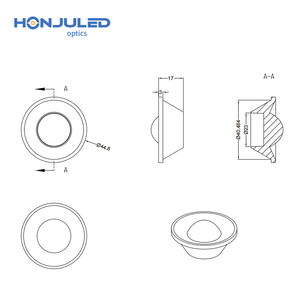
As a premier Chinese manufacturer and global exporter, our export catalog features pure genuine water buffalo horn, multi-ply horn and titanium hybrids, handmade acetate, ultra-elastic TR90, and medical-grade optical lenses calibrated for bespoke dispensaries worldwide.
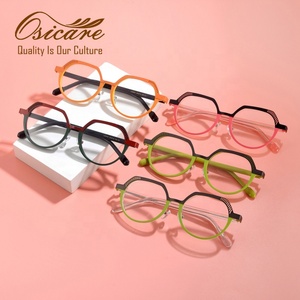
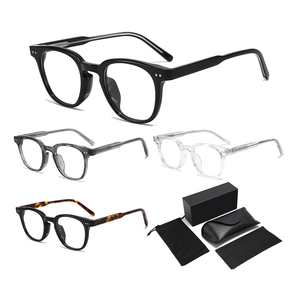
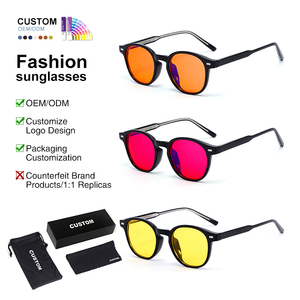
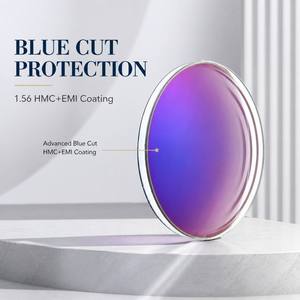
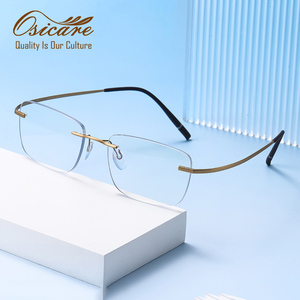
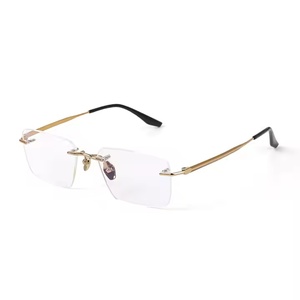
Bridging old-world European handcraft benchmarks with China’s high-precision automated manufacturing infrastructure. We empower independent luxury brands, optometry practices, and wholesale distributors with unyielding quality control, ethical material traceability, and dependable production timelines.
Every plate is extracted exclusively from cruelty-free domesticated Asian water buffalo (Bubalus bubalis). Horns are reclaimed as a biological byproduct of traditional agriculture, hand-graded by pigment depth, fibrous density, and structural integrity without wildlife harm.
Natural horn is inherently hygroscopic. Our facility subjects unworked slabs to an 8-stage humidity-controlled aging and thermal tempering cycle lasting over 45 days, effectively equalizing internal tensile stress and mitigating long-term structural warping.
Utilizing aerospace-grade hydraulic hot-pressing, we laminate alternating micro-sheets of natural horn at 90-degree cross-directional grain orientations. This multi-ply architecture creates a matrix with 300% greater fracture resistance than monolithic horn cutouts.
All finished horn frames, titanium fittings, and demo lenses are certified compliant with EU REACH Annex XVII, CE EN ISO 12870:2018, and US FDA 21 CFR 801.410 impact resistance mandates, complete with non-CITES customs clearance documentation.
Unlike mass-market injected plastics or standard cellulose acetate, natural horn consists of densely packed alpha-keratin filaments bound by an amorphous protein matrix. Understanding its unique physical properties is essential for optical dispensaries and brand procurement officers.
Horn possesses the exact chemical signature of human fingernails and hair. It is 100% hypoallergenic, free from plasticizers, phthalates, petroleum derivatives, and synthetic dyes. In prolonged contact with the human face, horn absorbs body warmth and ambient sebum, creating a non-slip, self-regulating ergonomic fit.
With a specific gravity ranging between 1.28 and 1.33 g/cm³, natural water buffalo horn provides a rich, tactile heft that is approximately 15% lighter than standard cellulose acetate and significantly warmer to the touch than cold milled titanium, reducing focal pressure on the nasal bridge.
Every horn frame is fundamentally unique. Variations in the animal’s age, mineral intake, and geographical habitat manifest in distinct pigmentation streaks—ranging from deep obsidian black and translucent honey amber to rare marbled white and slate charcoal. No two manufactured pairs are ever visually identical.
| Material Metric | Natural Water Buffalo Horn | Cellulose Acetate (Mazzucchelli) | Titanium / Horn Composite | Injected Polymer (TR90) |
|---|---|---|---|---|
| Composition | 100% Natural Organic Keratin Protein | Cellulose Acetate Polymer + Plasticizer | Layered Horn + Grade-2/5 Titanium | Polyamide / Grilamid Polymer |
| Skin Biocompatibility | Completely Hypoallergenic, Bio-active | Moderate (Plasticizer migration over time) | Maximum (Hypoallergenic contact surfaces) | High, Chemically Inert |
| Tensile Strength | 68 - 85 MPa (Multi-ply cross-laminated) | 45 - 60 MPa | 140 - 220 MPa (Hybrid structural core) | 55 - 75 MPa |
| Refinishing Capability | Indefinite (Can be rebuffed to high gloss) | Moderate (Surface degrades with acetone) | Indefinite horn restoration + PVD metal | Non-refinishable once scratched |
| Environmental Lifecycle | Fully Biodegradable (Soil compostable) | Degrades over 5-10 years (Semi-synthetic) | Separable recyclable metal + compostable horn | Non-biodegradable synthetic fossil fuel |
Based on extensive export audit data and distributor telemetry from Tier-1 optical trade channels across Frankfurt, Milan, Tokyo, and New York, strategic procurement behavior is shifting rapidly. Here are the core vectors dictating factory investments through 2026–2030.
Monolithic horn frames require strict clinical maintenance. The modern procurement standard favors Horn-Titanium Hybrids. In this configuration, ultra-thin 0.6mm natural horn plates are bonded to a flexible Japanese beta-titanium skeleton or an inner carbon fiber backbone, delivering the natural beauty of organic horn with the cold-glazing flexibility and screw-retained temple adjustability of modern eyewear.
Boutique opticians no longer accept factory runs requiring 1,000 units per colorway. Advanced Chinese production houses have adapted precision multi-axis CNC tooling to accommodate low-volume batch production (as low as 50 to 100 units per model). This allows private labels to test bespoke horn collections across discerning demographics without inventory exposure.
Today’s luxury consumer demands complete environmental transparency. Global buyers prioritize suppliers who provide certified veterinary origin documentation confirming horn materials originate as post-life agricultural coproducts, accompanied by zero-waste manufacturing statements where horn filings are reclaimed as nitrogen-rich bio-fertilizer.
From raw horn slab qualification to final international logistics clearance, our rigorous 120-day production methodology guarantees dimensional repeatability and bespoke finish perfection.
Raw water buffalo horns are inspected for hairline fractures, split longitudinally, boiled in natural oils, pressed into flat plates, and tempered in environmental equilibrium chambers (22°C, 55% RH) for 6 weeks.
Custom 2D/3D optical schematics are programmed into high-speed CNC cutting stations. Diamond-tipped cutters carve front frame eye-wires, lens bevels, and integrated nose bridge geometries to ±0.05mm tolerances.
Frames endure 72 hours of multi-stage tumbling with birchwood chips, pumice, and vegetal pastes, followed by three progressive stages of manual cotton-wheel polishing using pure organic beeswax to reveal deep crystalline depth.
Precision German OBE or Comotec spring hinges are micro-riveted into pre-drilled horn temples. Every batch undergoes 10,000-cycle temple flexion testing, bridge torque evaluations, and salt-spray corrosion resistance tests.
Technical, operational, and commercial clarifications for eyewear brand managers, procurement directors, and optical chain buyers.
For fully bespoke OEM designs (custom CAD blueprints, proprietary frame geometry, laser-engraved branding), our baseline MOQ starts at 100 pieces per model, which can be divided across 2 to 3 natural horn color variants (e.g., solid obsidian black, streaked brown, translucent amber). For stock models available in our distributor catalog, minimums start as low as 20 pieces for certified optical retail accounts.
No. Our frames are fabricated exclusively from the horn of domesticated Asian water buffalo (Bubalus bubalis), an agricultural livestock animal raised for dairy and farming throughout Asia. This species is strictly exempt from CITES (Convention on International Trade in Endangered Species) restrictions. We furnish all export consignments with certified Veterinary Health Certificates, Non-Wild Animal Declaration Statements, and Certificate of Origin documentation to ensure seamless clearance through US, EU, UK, and Japanese customs.
Natural horn does not possess thermal expansion properties like thermoplastic cellulose acetate; it cannot and must not be heated in a standard frame warmer or bead bath. Heating horn can cause delamination and structural embrittlement. Lenses must be glazed using cold-insert techniques. Precision digital lens edging must be sized accurately with a 1:1 bevel fit (reducing bevel tension to avoid stress fractures). For high-minus or high-plus Rx prescriptions, we recommend our Horn-Titanium hybrid models with screw-lock eyewire closures.
Because horn is an organic keratin structure, prolonged exposure to arid environments or intense direct sunlight will dehydrate the protein fibers, leading to a dull surface or micro-fissures. Every frame shipped from our manufacturing hub includes a clinical-grade maintenance kit containing pure organic horn balm (refined beeswax and botanical conditioning oils). Consumers should apply a thin layer of balm to the frame temples and bridge every 3 to 6 months. If accidental scratching occurs, the frame can be completely restored to a mirror luster on an optician’s cotton polishing wheel.
Delamination in sub-standard horn frames occurs due to moisture infiltration between adhesive layers and uneven internal tension. We counteract this through three proprietary manufacturing protocols: (1) Long-term stabilization of raw horn plates to match internal moisture content; (2) Applying medical-grade, moisture-curing polyurethane epoxy matrices engineered specifically for keratin-to-metal bonding; and (3) Hydraulic vacuum hot-pressing at precisely calibrated temperature-time-pressure curves to guarantee a permanent cross-molecular bond.
Rapid prototype sampling takes approximately 20 to 25 working days, encompassing 3D CAD modeling, CNC pilot milling, hand polishing, and logo prototyping. Mass production for standard bulk orders requires 60 to 75 working days. This duration is strictly necessary to respect the mandatory 45-day plate stabilization cycle and meticulous hand-finishing processes inherent to authentic organic horn craftsmanship.
Yes. While traditional European horn frames feature carved, fixed organic bridges, international distribution often necessitates multi-fit ergonomics. We precision-mill micro-recesses into the posterior bridge area and anchor Japanese beta-titanium pad arms with laser-welded micro-screws, fitting hypoallergenic silicone or pure titanium nose pads. This ensures maximum adaptability across diverse facial structures, including Asian-fit and low-bridge profiles.
We provide complete turnkey packaging programs: custom FSC-certified rigid boxes, genuine leather or vegan cork folding cases, micro-fiber lens cloths with customized digital debossing, serial-numbered authenticity warranty cards, and personalized horn care balm tins. Private branding can be applied to frame temples via high-precision laser etching, gold or silver foil foil-stamping, or deep CNC inlay filled with metallic lacquer.
While manual artistry handles the surface buffing, structural symmetry is maintained through computerized multi-axis CNC processing. All eyewire contours, temple drop angles, pantoscopic tilts (typically set between 8° to 10°), and face-form wrap angles are verified on optical bench profile projectors and mechanical coordinate measurement machines before assembly clearance.
We routinely provide comprehensive third-party testing dossiers through accredited laboratories such as SGS, Intertek, and TÜV Rheinland. These include EN ISO 12870 mechanical strength and sweat-resistance reports, REACH Regulation (EC) No 1907/2006 chemical screening (nickel release, cadmium, lead, phthalates), and FDA drop-ball impact compliance certifications for accompanying demo and sun lenses.
Whether you are an independent optical group seeking a proprietary private label horn collection, or an established luxury brand sourcing certified export-grade manufacturing from China, our engineering team is ready to review your CAD drawings and technical specifications.