
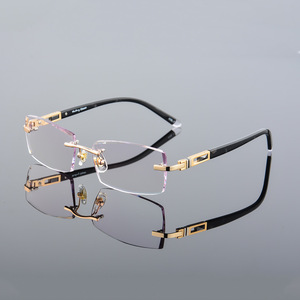
Engineered in compliance with ISO 12870, ISO 8980, and CE/FDA optical medical device standards. Direct factory-tested collections optimized for high-volume retail dispensaries and private-label boutique programs.
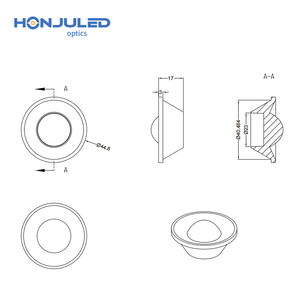
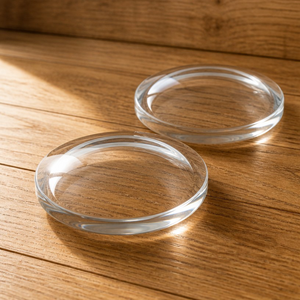

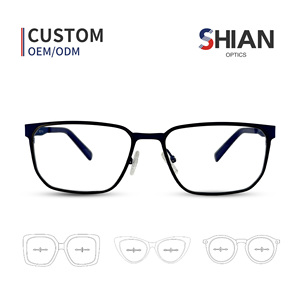
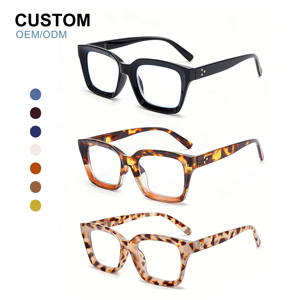
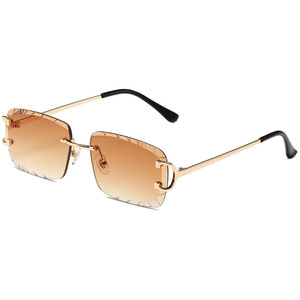
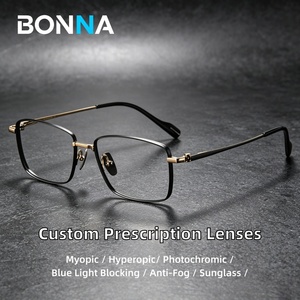
China produces more than 70% of the world's prescription frames and over 75% of ophthalmic lenses. Navigating this vast supply chain requires understanding regional industrial clusters, substrate purity, and advanced fabrication technologies.
Accounting for the world's highest concentration of optical monomer casting, our integrated Danyang manufacturing base utilizes Mitsui Chemicals MR-Series (MR-7, MR-8, MR-174) polythiourethane resins. This ensures uniform Abbe values, elevated impact resilience, and defect-free internal stress distribution across high-power spherical and progressive lens blanks.
Shenzhen (Henggang) operations anchor our luxury optical fabrication. Utilizing multi-axis CNC milling, Japanese JIS Grade-4 Pure Titanium, and Grade-5 Beta-Titanium wire EDM cutting, our cleanrooms achieve microscopic tolerance thresholds (<0.03mm) on eyewires, bridge soldering, and screwless friction-hinge assemblies.
Wenzhou manufacturing wings empower our rapid-response programs. Housing in-house tooling shops, automated robotic electroplating, and vacuum PVD coating lines, this facility enables high-throughput processing of stainless steel, Monel, and injected memory polymers with lead times compressed down to 25 workdays for bespoke B2B orders.
Traditional retail optical procurement often suffers from fragmented sourcing: optical frames sourced from specialized metal fabricators, un-cut lens pucks imported from separate casting plants, and secondary lab fitting outsourced locally at exorbitant labor rates. Our end-to-end Chinese manufacturing infrastructure dismantles this inefficiency. By co-locating multi-axis lens surfacing, vacuum thin-film anti-reflective (AR) coating laboratories, and frame assembly lines within unified industrial ecosystems, enterprise buyers eliminate multi-tier markups and achieve unmatched unit economics.
From private-label branding with custom laser engraving, pantograph temple stamping, and customized cellulose acetate laminations, to medical-grade packaging and direct-to-clinic replenishment, our technical consultation bridges Western optical design aesthetics with China's unrivaled manufacturing scale.
Optical procurement is evolving rapidly from simple bulk stocking to agile, digitally synchronized, and bio-circular supply chains. Sourcing directors must align their purchasing strategies with four decisive technological shifts.
B2B procurement is transitioning from semi-finished stock lenses to localized or near-source digital freeform surfacing. Integrating direct EDI transmission of patient cylinder, axis, and pantoscopic tilt data allows finished, edged prescription lenses to be mounted straight into pre-selected frames at source labs.
Regulatory pressure in the EU and North America (such as CSRD and Extended Producer Responsibility) demands sustainable substrates. Sourcing is shifting toward bio-based cellulose acetates synthesized with diethyl phthalate (DEP)-free bio-plasticizers derived from renewable cotton linter and wood pulp.
Hybrid optical-tech frames are gaining rapid retail market share. China's top prescription manufacturers are introducing standardized modular temple cavities engineered to house direction-speaker transducers, micro-MEMS microphones, and battery rails while preserving traditional prescription cold-glazing capabilities.
Rigid MOQs of 1,200 pieces per SKU are becoming obsolete. Lean agile production lines powered by digital UV printing, flexible laser cutting, and standardized modular core wires enable independent optical buyers to source customized capsule collections at accessible thresholds (100–300 pcs per style).
Delivering optical frames and prescription lenses that withstand dermatological contact, UV exposure, and mechanical stress requires deep metallurgic and chemical breakthroughs.
| Substrate / Technology | Specific Density | Tensile Yield | Chemical & Corrosion Resistance | Primary Application Segment |
|---|---|---|---|---|
| Japanese Beta-Titanium (β-Ti) | 4.43 g/cm³ | >880 MPa | Immune to human perspiration, saltwater, nickel-free | High-end minimalist, featherlight luxury prescription frames |
| High-Density Cellulose Acetate (HDCA) | 1.28 g/cm³ | High Elastic Recovery | Superior color depth, heat adjustable up to 65°C | Fashion statement bold fronts, vintage eyewear silhouettes |
| Polyetherimide (Ultem / PEI) | 1.27 g/cm³ | 105 MPa (Flexural) | Thermal stability (-30°C to 170°C), shape memory | Medical-grade ultra-flexible daily wear & children's optical |
| MR-8™ Optical Resin (1.60 Index) | 1.30 g/cm³ | High Impact Resilience | Abbe 41, high heat distortion resistance (>118°C) | The undisputed global benchmark for drilled rimless Rx lenses |
| MR-174™ Ultra-High Index | 1.47 g/cm³ | Precision Optical Purity | Thinnest profiles for extreme myopic prescriptions | High minus/plus corrections (> -6.00D or +4.00D) |
Utilizing advanced German Leybold and Satisloh box coaters, our partner cleanrooms deposit multi-layer alternating stacks of Zirconium Dioxide (ZrO&sub2;) and Silicon Dioxide (SiO&sub2;). This reduces residual lens surface reflectance down to <0.4%, drastically mitigating nighttime haloing and digital glare.
An ultra-thin fluorocarbon capping layer creates a contact angle exceeding 115°. Moisture, facial lipids, and airborne pollutants cannot adhere to the optical aperture, enabling smudge resistance, immediate fog dispersion, and effortless lint-free cleaning for the end patient.
Organosilicon dip-lacquering thermally cured over 4 hours yields a surface hardness matching 6–8H on the pencil test. This robust anti-scratch barrier prevents micro-abrasions caused by daily handling, extending prescription lens longevity over multiple years.
Clear, uncompromising answers to technical, regulatory, and logistics inquiries commonly raised by optical procurement directors, optometry practices, and private-label brand founders.
For fully bespoke OEM frame models (custom tooling, custom acetate laminations, or specific temple dies), standard MOQs range between 300 to 500 units per model, typically divided across 2 to 3 colorways. However, for ready-to-ship catalog frames or standard titanium chassis undergoing custom laser-engraved private branding, low-MOQ programs starting as low as 50 to 100 units per style are readily accommodated.
All lens blanks exported to the North American market undergo statutory testing in accordance with ANSI Z80.1 and FDA 21 CFR 801.410. A 5/8-inch steel ball weighing approximately 0.56 ounce is dropped from a height of 50 inches onto the horizontal front surface of the lens. Batches receive certified lot inspection certificates, and impact-resistant materials such as polycarbonate, MR-8, and Trivex are recommended for pediatric and safety frames.
Yes. Our centralized Danyang-Shenzhen RX lab interface connects via secure API/EDI to your patient order management software. Optical retail chains and direct-to-consumer (DTC) brands can transmit exact prescription parameters (Sphere, Cylinder, Axis, Add, Pupillary Distance, and Fitting Height). Automated CNC edging systems trace the frame groove and glaze single vision, progressive, or blue-filtering lenses directly into your selected frame line before sterile individual packaging.
Rapid CNC prototyping and 3D mockups can be delivered within 7 to 10 business days for dimensional fitting review. Once physical counter-samples and technical engineering drawings are approved, full-scale mass manufacturing typically requires 35 to 45 days for acetate and metal frames, and 50 to 60 days for complex pure titanium or bespoke CNC diamond-cut rimless eyewear requiring specialized PVD vacuum plating.
Structural integrity is governed by automated high-frequency induction brazing in inert gas atmospheres, preventing brittle oxide layers in metal joints. Furthermore, all hinge assemblies utilize self-locking nylon-coated screws or patented German OBE screwless spring mechanics, tested through 20,000 cycles of open-close fatigue stress testing under ISO 12870 protocols.
Our manufacturing facilities operate in strict accordance with ISO 9001 (Quality Management), ISO 13485 (Medical Devices), and ISO 14001 (Environmental Management). Products carry valid CE Declarations of Conformity under EU Medical Device Regulation (MDR 2017/745), U.S. FDA factory registration numbers, and rigorous RoHS / REACH compliance reports verifying nickel-release thresholds below 0.5 μg/cm²/week.
Whether you are an independent optical distributor planning next season's frame boards, an optometry group expanding private-label Rx lines, or a retail chain seeking direct factory pricing—our optical engineering specialists are ready to consult on your exact specifications.