Engineered for precision prescription glazing across independent optical boutiques in Marylebone, Mayfair, Canary Wharf, and Shoreditch. Compliant with European Class I Ophthalmic Standards.
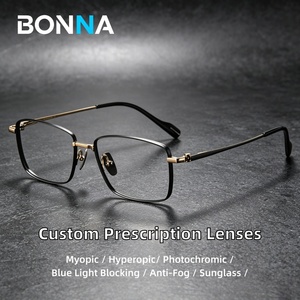

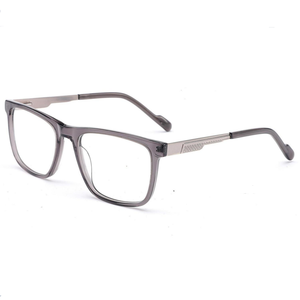
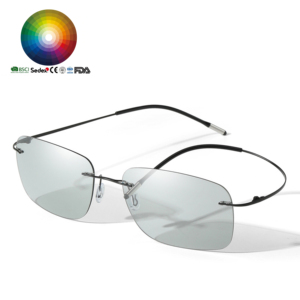
Why the capital requires segmented frame board curation rather than generic wholesale assortments. An empirical breakdown for dispensing opticians and practice owners.
Dispensaries attached to private ophthalmology and corneal surgery clinics require high-tolerance bevel engineering. Frames must accommodate complex progressive addition lenses (PALs), high minus index (1.74) profiles, and post-refractive surgery protection. Minimalist, hypo-allergenic pure titanium and screwless rimless architectures dominate dispensing recommendations in W1G.
Corporate professionals working under intensive dual-monitor and artificial LED illumination in EC2 and E14 prioritize understated architectural silhouettes. Blue-light filtering anti-fatigue lenses fitted into satin gunmetal beta-titanium or deep tortoise acetate profiles offer the quintessential transition between corporate boardrooms and digital trading terminals.
In creative design, media, and architectural clusters (W1D, EC2A, E8), consumer intent pivots toward expressive geometric volumes, chunky 8mm milled bio-acetate bevels, warm champagne translucents, and vintage keyhole bridges. Patients reject overt high-street luxury logos, demanding independent provenance, artisanal polishing, and distinct tactile richness.
Multi-generational independent practices in high-income commuter enclaves demand balance: lightweight ergonomics for active lifestyles, classic British styling with durable spring hinges, and robust children's optical frames made with flexible, non-toxic memory polymers. Repeat client retention relies on frames with zero galvanic plating breakdown over years of wear.
Following the United Kingdom’s departure from the European Union, independent optical retailers and wholesale frame distributors operating within Greater London face an evolving dual-regulatory regime. Under the Great Britain regulatory framework overseen by the Medicines and Healthcare products Regulatory Agency (MHRA), spectacle frames are categorized as Class I Non-Sterile Medical Devices. To ensure complete legal saleability and protect optical practices from regulatory sanctions, every spectacle frame in our manufacturing output maintains strict dual-certification under both the European Medical Device Regulation (EU MDR 2017/745) and the UK Medical Devices Regulations 2002 (SI 2002 No 618, as amended).
Our quality assurance protocol validates each production batch against the comprehensive testing parameters outlined in BS EN ISO 12870:2018 (Ophthalmic optics — Spectacle frames — Requirements and test methods). Compliance is not simply a decorative stamp on the temple core; it represents rigorous physical testing:
| Standard / Regulation | Specific Test Parameter | Laboratory Test Threshold | Dispensary Consequence |
|---|---|---|---|
| BS EN ISO 12870: Sec 4.3 | Nickel Release (EN 16128) | < 0.5 μg/cm²/week for direct skin-contact parts | Eliminates contact dermatitis, patient returns, and allergic lawsuits across sensitive skin profiles. |
| BS EN ISO 12870: Sec 4.6 | Bridge Deformation & Lens Retention | Cyclic fatigue testing (500 cycles at 40N bridge expansion) | Lenses stay mechanically locked in eyewire bevels; prevents spontaneous popping during seasonal heat changes. |
| BS EN ISO 12870: Sec 4.8 | Resistance to Perspiration (ISO 3160-2) | Artificial sweat immersion at 35°C for 24+48 hours | Prevents green verdigris corrosion, blistered electroplating, and delamination along temple inner walls. |
| BS EN ISO 12870: Sec 4.9 | Dimensional Thermal Stability | Air bath conditioning at 60°C ± 2°C for 4 hours | Assures glazing labs that frames will not warp or lose pantoscopic tilt / wrap angle during warm delivery vans. |
For UK practices placing private-label orders, we provide a complete technical documentation dossier, including full Declaration of Conformity (DoC), traceable batch master logs, and MHRA-compliant UDI (Unique Device Identification) barcode mapping ready for automated practice management systems like Optix, Focus, and Ocuco.
Understanding why our frames withstand high-dioptre laboratory edging and repetitive manual adjustments at the London optician dispensing table.
We source ultra-pure cotton linters and wood pulp flakes seasoned for a minimum of 90 days in humidity-controlled vaults to evacuate plasticizer residual stress. This prevents frame shrinkage and cold-snap brittleness during lab glazing. For eco-conscious boroughs (Camden, Islington, Hackney), we offer 100% bio-degradable acetate (tested under ISO 14855) plasticized with renewable vegetable esters, zero phthalates, and carbon-reduced curing.
For rimless mounts and ultra-thin profiles, we engineer components with Ti-15V-3Cr-3Sn-3Al beta alloy. Delivering a tensile strength exceeding 1200 MPa alongside an ultra-low Young’s modulus, the temples provide gentle, self-adjusting cranial clamping force without pinching the temporal artery. Our rimless chassis weigh as little as 2.4 grams without dummy lenses, eliminating bridge pressure depressions.
Traditional wet galvanic finishes wear thin on temple contact points within 9 months of London humidity and skin perspiration. Our metal frames undergo advanced Physical Vapour Deposition (PVD) inside a 10^-5 Pa high-vacuum chamber. Depositing a titanium nitride (TiN) hard base layer topped with genuine 24K gold, rose gold, or ruthenium plating yields a 3.5 μm surface hardness of 2000 HV, resisting abrasive keys and perfumes.
A primary friction point for London optical practices is the lab breakage rate of imported wholesale frames. When an independent practice sends a frame to remote surfacing facilities like Essilor, Hoya, Seiko, or Norville, brittle eyewires and incorrect groove depths result in chipped lenses, broken eyewires, and delayed patient dispensing appointments.
Our frames are engineered specifically around standard optical grooving wheels and CNC 3D tracer tolerances:
Direct, pragmatic answers addressing post-Brexit customs clearance, minimum order volumes, private label branding, and UK courier delivery.
52□18-140 CE UKCA). Furthermore, we supply verified test certificates showing adherence to EN ISO 12870, fulfilling your due-diligence responsibilities under the General Product Safety Regulations and MHRA enforcement audits.
Request our comprehensive wholesale ophthalmic frame catalogue, complete with exact millimeter bridge measurements, temple lengths, pantoscopic angle specs, and factory-direct volume pricing.