
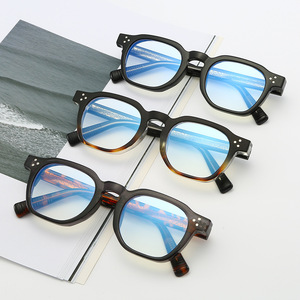
Direct factory-floor prescription solutions calibrated for Japanese JIS standards, low pupillary distance tolerances, and lightweight office ergonomics.

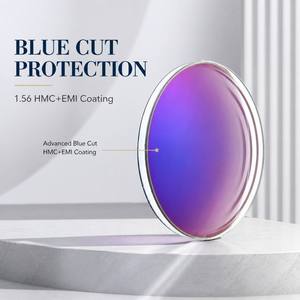
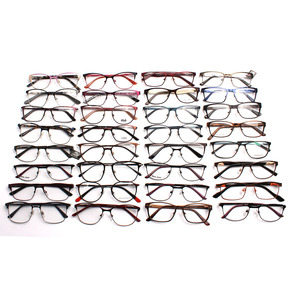
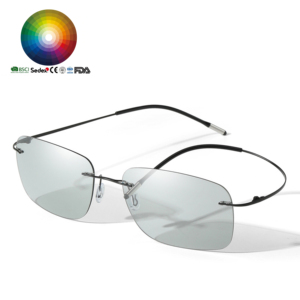
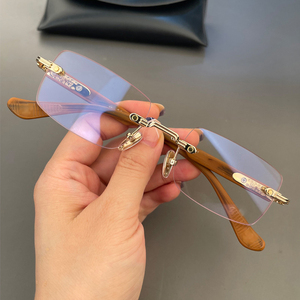
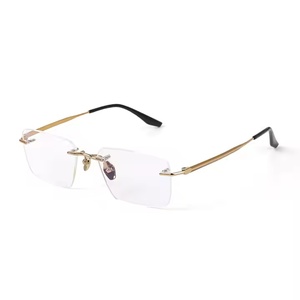
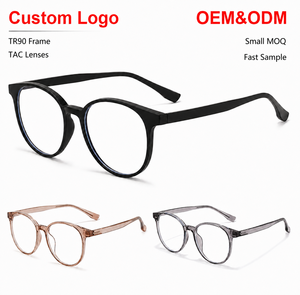
Surpassing JIS B 7285 optical specifications for high-index prescription glazing and rimless groove fitting.
Featherweight structural mass reducing prolonged nasal bridge depression in Japanese office wearers.
Rigorous 100% manual microscope audit before export, matching Japanese consumer retail expectations.
Vacuum-deposited multi-layer coatings optimized for digital terminal work environments in Tokyo and Osaka.
The Japanese optical market represents one of the most discerning regulatory and commercial environments in the global eyewear industry. Japanese consumers treat prescription frames not merely as medical correction devices or casual fashion accessories, but as micro-engineered wearable tools where structural balance, sub-millimeter nasal bridge ergonomics, hinge torque stability, and finish durability are assessed critically at the dispensary counter. As an established custom OEM/ODM prescription eyewear wholesale exporter, our manufacturing infrastructure is purpose-built to address the demanding technical criteria of Japanese optometry groups, regional retail chains, and independent boutique optometrists.
Exporting prescription frames into Japan requires a holistic understanding of JIS B 7285 (Ophthalmic optics — Spectacle frames) standards, alongside the strict physical requirements governed by the Pharmaceutical and Medical Devices Agency (PMDA) for medical Class I devices. Frame components must withstand rigorous corrosion resistance cycles, artificial perspiration tests, and temple cyclic flex testing exceeding 20,000 actuations without loss of screw friction or structural fatigue. When overseas optical importers source from our OEM facility, they eliminate the quality variance typical of generic wholesale suppliers, gaining access to precision engineering designed specifically for Japanese optical dispensing boards.
Nose pad arms engineered with extended goose-neck curves and modified 3D pad angles to rest securely on lower nasal profiles without cheekbone impingement.
High-purity Grade 2 pure titanium fronts fused with super-elastic Beta-titanium (Ti-15V-3Cr-3Sn-3Al) temples, offering non-allergenic and ultra-flexible longevity.
Optimized eyewire groove depths and bevel profiles tailored for high minus refractive powers (-4.00D to -10.00D) prevalent in Japanese urban demographics.
Our OEM production pipelines incorporate 5-axis CNC machining centers, proprietary cold-forging for rim-lock barrels, and multi-stage manual tumbling using Japanese walnut shell granules to achieve mirror-finish acetate luster. By integrating precision hardware with localized ergonomic specifications, we deliver export-grade prescription optical frames that allow Japanese optometrists to glaze complex multifocal, bifocal, and progressive lenses with zero frame distortion.
Succeeding in Japan's wholesale optical sector requires moving beyond standard European or North American silhouettes. Anthropometric research reveals distinctive cranial and facial morphology across the Japanese populace: broader temporal bone widths, shorter corneal vertex distances, flatter facial profile planes, and lower nasal dorsums. When international frames lacking localized design are introduced to Japan, consumers experience continuous frame slippage, eyelash contact with the inner lens surface, and vertex-induced optical aberrations in progressive prescriptions.
Our OEM engineering teams have resolved these dimensional challenges through specialized structural adaptations:
| Engineering Dimension | Standard Western Specification | Japanese Market Asian-Fit OEM Adaptation | Clinical & Commercial Benefit |
|---|---|---|---|
| Nose Bridge Width (DBL) | 18mm – 21mm wide flat stance | 15mm – 17mm with elevated bridge vertex | Prevents downward slippage; locks optical center (OC) aligned with pupil. |
| Pantoscopic Tilt Angle | 10° – 12° forward slope | 6° – 8° shallow ergonomic incline | Prevents bottom eyewire from making contact with cheekbones during smiling or speaking. |
| Temple Curvature & Splay | Straight linear sweep (narrow skull width) | Pre-contoured wrap with widened temple spacing | Eliminates lateral mastoid pinching, distributing mass evenly across the temporal bone. |
| Nose Pad Stems | Rigid short-neck or fixed acetate saddles | Adjustable Beta-titanium s-arms with multi-tilt pads | Permits micro-adjustments by in-store opticians during fitting consultations. |
| Lens Groove Depth | Standard 0.5mm V-bevel | Reinforced 0.8mm deep bevel with rim-lock support | Accommodates thick high-minus lens edges without rim warping or lens popping. |
Beyond ergonomic fit, the macro-demographic transition in Japan has created substantial shifts in product category demand. Japan possesses the world's highest median age, with over 29% of the population aged 65 or older. This demographic reality drives sustained, non-cyclical wholesale demand for progressive addition lens (PAL) compatible frames. A viable frame board in Tokyo or regional prefectures must balance sufficient vertical B-measurement (minimum 32mm to 36mm corridor depth) with lightweight, unobtrusive aesthetics that appeal to modern active seniors.
Our OEM prescription eyewear frames and coated lens substrates are deployed across diversified commercial and clinical environments throughout Japan. By formulating customized OEM production runs tailored to specific retail niches, we assist Japanese brand holders and wholesale distributors in capturing high-margin market share.
Target Environment: Marunouchi, Otemachi, and Roppongi corporate headquarters.
Prescription Specification: Custom TR90 or minimalist Beta-titanium rimless frames paired with 1.56 or 1.60 HMC EMI Blue-Cut lenses. Employees facing multiple 4K monitors and mobile screens for 10+ hours daily demand zero frame pressure, non-reflective antireflection coatings, and targeted 415–455nm HEV blue light filtration to alleviate digital eye strain (DES) without noticeable yellow tint shifts.
Target Environment: Community optical practices and optometry clinics in Kanagawa, Osaka, and Fukuoka.
Prescription Specification: Wire-reinforced high-density cellulose acetate frames and pure titanium half-rim styles. These models offer a generous 34mm+ B-dimension to accommodate wide-corridor freeform progressive lenses, coupled with soft medical-grade silicone nose pads that distribute weight gently on thin, sensitive mature skin.
Target Environment: Urban optical retail chains targeting Gen-Z and millennial professionals.
Prescription Specification: Geometric polygonal metal frames, vintage keyhole acetate rounds, and translucent champagne/crystal lightweight PC frames. These frames combine trend-responsive street styling with precise optical lens seating, serving as daily statement accessories ready for immediate in-store 30-minute edging and dispensing.
Drawing on decades of dedicated optical manufacturing and contract manufacturing, our facility bridges the gap between cost-effective volume scalability and the zero-defect ethos demanded by Japanese trade buyers. We operate dedicated clean-room production cells, multi-axis computerized CNC engraving, and precision automated electroplating lines capable of meeting the stringent chemical resistance tests established by Japanese laboratories.
Vacuum physical vapor deposition (PVD) and ion plating technology yields a hard, non-porous titanium carbonitride or precious metal surface layer. Frames endure sweat corrosion tests (ISO 12870 / JIS B 7285) without pitting, peeling, or discoloration under humid Japanese summer conditions.
While standard international export eyewear adheres to AQL 1.5 or 2.5, our dedicated Japan-bound production lines implement strict AQL 0.65 optical standards. Each frame undergoes dual inspection for hinge alignment, temple tension, lens groove symmetry, and microscopic finish uniformity.
Complete turnkey solutions including micro-laser temple logo engraving, custom hot-stamping, serialized batch identification, Japanese-language barcoded retail boxes, and eco-friendly microfiber pouches compliant with Japan's Act on the Promotion of Resource Circulation for Plastics.
Whether you require low-MOQ pilot production runs to test emerging seasonal silhouettes across Tokyo flagship stores, or container-load annual volume replenishment for multi-prefecture retail optical chains, our engineering teams provide end-to-end technical support from initial CAD rendering and 3D resin prototyping to final clearance documentation.
Technical, regulatory, and supply chain insights for optical wholesalers, retail directors, and private label brand managers.
Connect directly with our senior optical engineering and export division to review material formulations, request physical sample kits, or discuss custom tooling requirements for your next optical collection serving the Japanese market.
Inquire Now