Engineered to eliminate glare, resist delamination, and fulfill stringent ANSI Z80.3 and ISO 12312-1 international optical transmittance benchmarks.
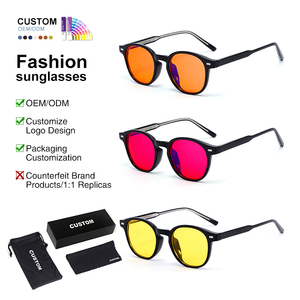
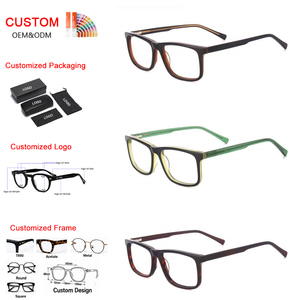
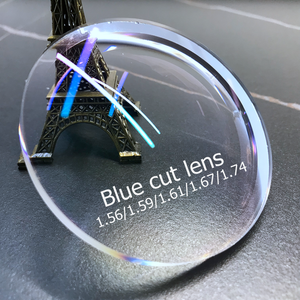


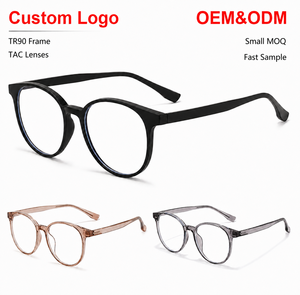
Polarized ophthalmic lenses represent the pinnacle of micro-layer optical lamination. When selecting an export partner in China, understanding the physics behind dichroic ratio alignment, thermal stability, and resin-film adhesion energy is essential for securing long-term brand equity.
At our certified manufacturing facilities, the core of our polarizing performance is an ultrathin Polyvinyl Alcohol (PVA) film. The raw film is immersed in a specialized iodine or dichroic dye bath and elongated 4 to 5 times its original dimension under strict temperature and tension gradients. This creates microscopic parallel chains of absorbing molecules that selectively extinguish horizontally polarized glare with a luminous efficiency consistently exceeding 99.8% across 400nm to 700nm wavelengths.
The primary failure mode in budget polarized sunglasses is peripheral delamination during lens edging. We utilize a dual-sided chemical coupling primer that bonds the core polarizing film to optical substrates—including Polycarbonate, CR-39, and MR-8 polyurethane resin. During injection compression or monomer casting, our precise temperature ramping cycles prevent thermal warping and retain a strictly centered polarizing axis within a stringent tolerance of ±1°.
Each lens undergoes multi-layer physical vapor deposition (PVD) inside computerized German Leybold vacuum chambers. Our Super Hydrophobic Multi-Coating (SHMC) stack comprises an adhesion oxide base, an ultra-hard polysiloxane quartz anti-scratch shield, a 7-layer anti-reflective dielectric stack, and a fluorocarbon top-coat imparting an oil-repellent contact angle of 115°. The result is unmatched smudge resistance and scratch durability for extreme marine and high-altitude use.
Choosing the right substrate depends on the buyer's retail positioning, Rx glazing complexity, impact safety requirements, and chromatic aberration thresholds.
| Substrate Material | Refractive Index | Abbe Value | Specific Gravity | Impact Standard | Primary Commercial Application |
|---|---|---|---|---|---|
| TAC (Triacetate Cellulose) | 1.499 | 58 | 1.27 g/cm³ | Standard UV400 Drop Ball | Fast-fashion retail, ultra-lightweight promotional sunwear, budget plano sunglasses. |
| Optical Polycarbonate (PC) | 1.586 | 30 | 1.20 g/cm³ | ANSI Z87.1 High Velocity | Active tactical eyewear, motorcycle shields, performance sports sunglasses. |
| CR-39 (ADC Resin) | 1.498 | 58 | 1.32 g/cm³ | FDA 21 CFR 801.410 | Independent optical boutique frames, baseline prescription polarized lenses. |
| MR-8 (Thiourethane Polymer) | 1.600 | 41 | 1.30 g/cm³ | High Tensile Drill-Mount | Premium rimless prescription, high-index corrective polarized sunwear, luxury optometry. |
| Mineral Glass (Crown Glass) | 1.523 | 59 | 2.54 g/cm³ | Chemical Tempering | High-end marine and angling brands, extreme scratch-proof heritage sunglasses. |
As consumer optical expectations advance and digital cockpits alter glare profiles, wholesale importers must anticipate emerging shifts in material science and regulatory mandates.
Global regulatory scrutiny across the EU and North America is driving rapid adoption of bio-cellulose acetate butyrate and plant-derived monomers. International buyers are prioritizing suppliers whose polarizing filters are encapsulated within eco-friendly bio-based polymers synthesized from non-food agricultural biomass. Our supply chain currently integrates bio-TAC and sustainable polyurethane platforms that deliver identical Abbe dispersion clarity with an up to 45% reduced cradle-to-gate carbon footprint.
The traditional compromise between static polarization and variable light transmission has been resolved. The next procurement cycle is dominated by dynamic lenses combining fast-switching naphthopyran photochromic dyes with low-baseline polarization layers. These lenses adjust seamlessly from Category 1 transparency (38% luminous transmittance) in ambient indoor environments to Category 3 high-contrast polarization (12% transmittance) under direct ultraviolet activation.
The proliferation of automotive OLED digital instrument clusters, aviation Head-Up Displays (HUD), and smartphone screens has created challenges with cross-polarized blackout patterns. Next-generation optical filters utilize calibrated quarter-wave retardation films (QWP) that convert linearly polarized light into circularly polarized waves. This eliminates screen distortion, color banding, and rainbow patterns while retaining 99% reduction of road glare.
Combining European optical design tolerances with Danyang and Shenzhen manufacturing efficiency, our production ecosystem provides complete security of supply.
Eliminating airborne particulate contamination is the baseline requirement for zero-haze optical lamination. Our monomer casting, film stretching, and vacuum hard-coating lines operate within certified cleanroom environments under constant temperature and humidity control.
Every production batch undergoes spectrophotometric transmittance mapping from 280nm to 780nm. We verify complete UV400 cutoff, luminous transmittance categorization (Cat. 0 to 4), and polarization extinction ratios using PerkinElmer optical testing rigs.
We engineer precision toroidal and aspherical surfaces across 2, 4, 6, and 8 base curves. Our digital freeform surfacing equipment enables prescription-wrapped sports lenses with prism compensation, eliminating swim-effect and peripheral distortion.
With direct logistics integration through Shanghai and Ningbo maritime hubs, we handle full export customs declaration, FDA medical device registration, and CE conformity declarations to safeguard your supply chain against port delays.
Clear, definitive answers addressing technical tolerances, minimum order requirements, laboratory edging behaviors, and private labeling.
Under international standards ANSI Z80.3 and ISO 12312-1, the allowable axis deviation is within ±3° of the horizontal plane. However, our precision casting molds maintain an internal factory standard of ±1°. This ensures zero binocular rivalry when mounting paired lenses into high-end sunglasses and optical frames.
Delamination typically occurs when cutting coolant weakens unbonded PVA film edges. We apply a proprietary organosilicon hydrophobizing edge barrier and use thermal-fusion bonding for PC and cast-integrated interfaces for MR-8 and CR-39. This maintains lens cohesion even in automated dry-cut and high-pressure wet edgers.
For standard stock blanks (e.g., Plano TAC 1.0mm in Gray-3 or Brown-3), our baseline MOQ starts at 300 pairs. For customized mirror coatings (Silver, Ice Blue, Ruby Red), gradient polarized profiles, or MR-8 semi-finished blanks, the standard production run is 500 to 1,000 pairs per SKU.
Yes. We export 70mm, 75mm, and 80mm semi-finished polarized blanks in 1.498 CR-39, 1.586 Polycarbonate, and 1.60 MR-8. Front base curves range from 2.00D to 8.50D with uniform film placement precisely 1.0mm from the front convex surface to facilitate digital freeform back-surfacing.
Our quality verification protocol mandates: (1) 15-minute boiling salt water immersion without peeling; (2) Cross-hatch tape adhesion test conforming to ASTM D3359; (3) Bayer abrasion resistance testing; and (4) Continuous QUV accelerated weathering chamber exposure for 200 hours.
Finished and semi-finished lenses are sealed in anti-static, moisture-barrier paper sleeves or scratch-resistant individual bags, nestled in shock-absorbent partitioned trays (25 pairs per box). Master export cartons are reinforced with internal honeycomb board and desiccants to withstand humidity during sea freight.
Request master product catalogs, request factory-audited spectrophotometric batch reports, or order custom OEM sample kits tailored to your brand's optical requirements. Our technical sales engineering team provides full quotes and manufacturing consultations.