B2B Optical Sourcing Intelligence & OEM Whitepaper

Top China Eco-Friendly Eyewear Factories & Supplier

Strategic B2B procurement matrix: bio-acetate polymers, recycled TR90 injection, aerospace-grade titanium, and carbon-neutral supply chains for independent optical dispensaries and global private label brands.

Certified Sustainable Eyewear & Precision Optics Portfolio

Direct-from-source engineering combining bio-based circular polymers, ultralight ergonomic ergonomics, and compliant ophthalmic optics tailored for independent retailer frame boards.

68%
Plant-Derived Bio-Carbon Share
< 0.02%
Defect Rate Via ISO 12870 Testing
100%
Traceable Circular Raw Materials
45+ Days
Rapid Prototyping-to-Shelf Cycle

The Paradigm Shift in China's Sustainable Optical Manufacturing

An authoritative breakdown of material science evolutions, supply chain regulatory compliance, and margin optimization for professional optical buyers.

Bio-Based & Biodegradable Acetates

Traditional cellulose acetate depends heavily on phthalate chemical plasticizers. Our tier-one Chinese clean-room facilities utilize bio-based diethyl phthalate-free formulas compounded from wood pulp and cotton seed linter. Certified via ISO 14855 and OECD 301B, these frames achieve degradation thresholds within 115 days in industrial compost environments without structural micro-stress degradation.

Aerospace Closed-Loop Metallurgy

Utilizing high-tensile Beta-Titanium and pure Japanese-grade raw ingot blanks, Chinese micro-foundries have perfected near-zero waste CNC cold-forging. Shavings and cutoffs are magnetically reclaimed in closed vacuum loops, yielding ultra-resilient rimless and full-rim silhouettes that bypass corrosive electroplating baths in favor of eco-friendly physical vapor deposition (PVD).

ESG Regulatory Proof & Traceability

The European Green Claims Directive and US FTC Green Guides strictly penalize ambiguous greenwashing. Forward-thinking suppliers provide third-party validated Life Cycle Assessments (LCA), REACH SVHC declarations, and GRS (Global Recycled Standard) certification down to individual production batches, ensuring flawless import clearance.

Future Procurement Trends (2025–2030)

  • Digitalized Small-Batch Agility: Transitioning away from 1,200-piece minimums to agile 100-300 piece multi-SKU runs, allowing independent practices to protect working capital and test boutique designs.
  • Digital Product Passports (DPP): Micro-laser etched QR identifiers on inner temples revealing material origins, carbon tonnage, and lens recycling parameters to satisfy tech-forward retail end-users.
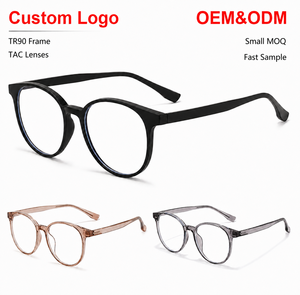
  • Castor-Derived Polyamides: Broadscale replacement of crude-oil derived TR90 with bio-based Rilsan Clear polyamides, achieving 45% lower carbon emissions without sacrificing mechanical elasticity.
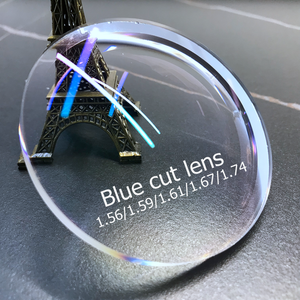
  • Ophthalmic Blue-Cut Monomer Innovations: Incorporating plant-based polymer carriers within UV420 blocking lenses, providing crystalline optical purity without petrochemical residue.

Evolution of Sustainable Eyewear Production

  • Historical Baseline (2015-2019): Superficial marketing utilizing bamboo temple accents on virgin plastic frames; fragile structural points and inconsistent hygroscopic swelling.
  • First Generation Circularity (2020-2023): Mechanical post-consumer recycled (PCR) plastics with high color variability, brittleness, and limited prescription lens bevel compatibility.
  • Modern Precision Era (Current): Chemically depolymerized ocean waste plastics and homogeneous bio-acetates achieving structural parity with luxury Italian acetates.
  • Future Regenerative Outlook: Negative-emission algae pigments, waterless CNC polishing drums, and decentralized automated micro-fulfillment directly from factory floors.

Enterprise Advantages: Engineering Behind Independent Success

Combining OEM/ODM high-capacity manufacturing lines with the tailored, boutique curation required by private practices and optical retailers.

Bespoke OEM/ODM Tooling Mastery

Our collaborative industrial engineering studios bridge western aesthetic curation with southern Chinese manufacturing speed. We facilitate custom 5-axis mold tooling, 3D laser engraving, pantoscopic tilt customization, and unique bridge geometry suited for global facial anatomies with ultra-rapid prototyping turnaround.

Curated Frame-Board Balance

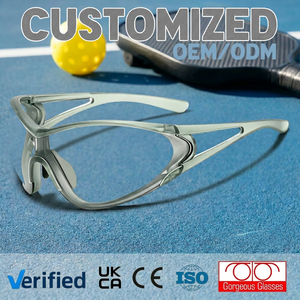
We solve the common wholesale pitfall of inventory stagnation. Taking direct inspiration from established luxury distributors, our product development balances conversational statement color-block pieces, ultralight professional daily wearers, and certified sports/active wear to ensure complete dispensary board harmony.

Stringent Lab-Grade Quality Control

Every frame lot undergoes comprehensive stress-testing: 20,000-cycle bridge fatigue endurance, sweat/corrosion immersion testing, temple flex memory evaluation, and 100% spectrophotometric optical verification for non-glare, polarization, and blue-light attenuation compliance.

Procurement Intelligence & Sourcing FAQ

Crucial commercial, technical, and regulatory answers for opticians, buyers, and sourcing executives.

What verifiable standards validate your eyewear as genuinely eco-friendly?
Authentic sustainable eyewear requires verifiable supply chain certificates rather than self-declared claims. Our factory partner nodes provide ISCC PLUS (International Sustainability and Carbon Certification), GRS (Global Recycled Standard) transaction certificates, and ISO 14855 testing reports validating bio-degradability under industrial conditions. All ophthalmic lenses meet FDA 21 CFR 801.410 impact resistance standards and EU CE MDR 2017/745 regulations.
How do bio-acetate frames perform compared to traditional Italian or standard cellulose acetate?
Modern bio-acetates maintain identical tensile yield strength, surface hardness, and chromatic depth as traditional formulations. They are compatible with conventional optometric bench tools, allowing optical dispensers to warm, adjust, and cold-snap prescription lenses into bevels without risking thermal embrittlement, whitening, or warp memory loss over time.
What are the standard Minimum Order Quantities (MOQ) for custom OEM branding?
While legacy Chinese optical manufacturing models often demand 1,200 pieces per mold, our streamlined supply chain accommodates independent private labels with low initial MOQs of 100 to 300 pieces per SKU for select in-stock eco-bases with custom laser branding, bespoke pad printing, and custom-packaged cases made from recycled FSC cardboard and vegan leather alternatives.
Can our dispensary order mixed styles and colors within a single procurement order?
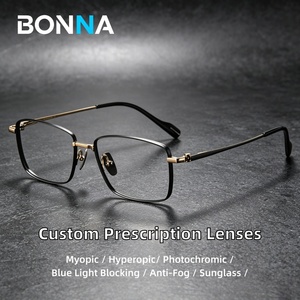
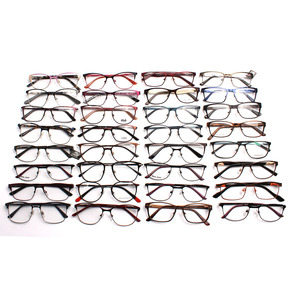
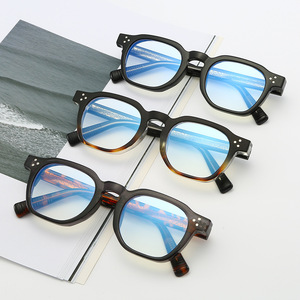
Yes. Frame board planning requires visual diversification. We encourage mixed-assortment purchase orders allowing you to balance sport TR90 protective styles, vintage square titanium silhouettes, rimless minimalist frames, and blue-cut PC models under unified commercial trade terms and consolidated air/ocean freight logistics.
What is the typical production and delivery timeline for customized optical collections?
Standard lead times for ready-to-brand catalog frames range between 15 and 25 calendar days. Complete bespoke ODM engineering involving custom CAD renderings, rapid 3D SLA prototyping, and dedicated mold casting typically requires 45 to 60 days from final blueprint sign-off to factory dispatch.

Upgrade Your Frame Board With Verified Sustainable Eyewear

Consult with our senior technical sourcing specialists. Review certified material data sheets, request curated sample kits, and access wholesale catalog rates configured for independent optical businesses.

Contact Us