Export-ready ophthalmic blanks, high-tensile TR90 silhouettes, and handmade acetate designs calibrated for South Korea's high-power prescription trends.
The Metropolitan Seoul optical market represents one of the world's most sophisticated, trend-accelerated, and quality-discerning eyewear arenas. Spanning the dense wholesale distribution corridors of the historic Namdaemun Optical Market (남대문 안경골목) to the avant-garde design showcases in Seongsu-dong and luxury eyewear boutiques along Apgujeong-ro and Cheongdam-dong, sourcing cat eye frames requires an acute understanding of local consumer biometrics, digital lifestyles, and strict national compliance standards.
Historically considered a retro Western archetype, the cat eye frame has undergone a radical design paradigm shift across South Korea. Modern Seoul consumers reject heavy, ill-fitting vintage silhouettes in favor of Micro-Geometric Cat Eye Contours, Architectural Translucent Upsweeps, and Ultra-Slim Featherweight Hybrids. In this hyper-connected metropolis, eyewear serves simultaneously as a non-surgical facial framing instrument (V-line enhancement) and a vital shield against high-energy digital glare. For international optical brand owners, private label distributors, and ophthalmic clinic chains, establishing an OEM/ODM manufacturing pipeline requires more than basic assembly; it demands structural bio-adaptation, advanced material formulation, and tight optical lens co-development.
Engineered with built-up 12-15mm acetate nose pads, lowered bridge crests, and reduced pantoscopic tilt (8° vs Western 12°) to prevent cheek contact and makeup smudging among Seoul consumers.
Precision multi-axis CNC milled from stabilized cellulose acetate cured for 90 days. Guarantees dimensional stability against warping under humid monsoons and dry, heated winter interiors.
Full compliance with South Korean Safety Standard Framework under KATS. Zero phthalates, non-nickel hinges, heavy-metal-free temple core wires, and biocompatible skin-touch components.
The most prevalent source of inventory stagnation and retail returns for Western-origin cat eye frames in South Korea is anatomical mismatch. Standard European and North American cat eye frames rely on wide bridge spans (18-21mm), minimal pad projection, and an aggressive forward pantoscopic rake. When worn by individuals with broader cheekbones and lower nasal bridges—prevalent across Korean demographics—standard frames generate three critical friction points:
Our manufacturing facility addresses these biometric bottlenecks directly at the tool-and-die and CNC tooling level. By establishing a bridge seat between 15.0mm and 17.5mm, deepening the pad splay angle to 30-34 degrees, and increasing the step-pad elevation to 5.5mm, our cat eye frames achieve natural vertical clearance. Furthermore, our metal-acetate combination cat eye collections utilize S-shaped beta-titanium goose-neck pad arms with hypoallergenic medical-grade ceramic or silicone nose pads, allowing dispensing opticians in Seoul to micro-adjust heights in seconds.
| Engineering Parameter | Conventional Western Cat Eye Spec | Our Seoul-Optimized Asian-Fit Spec | Functional Benefit for Seoul Retail Dispensing |
|---|---|---|---|
| Nose Bridge Width (DBL) | 19.0mm – 22.0mm | 15.0mm – 17.0mm | Prevents bridge slippage down low nasal crests; maintains optical center alignment. |
| Pantoscopic Angle | 12° – 16° downward tilt | 7° – 9° shallow tilt | Eliminates lower rim cheek rub; preserves correct vertical gaze optics for high-power lenses. |
| Pad Arm / Step Elevation | Flat integrated (1.5mm - 2.5mm) | Raised 5.0mm - 6.0mm stepped pad | Increases vertex distance by 3.2mm, stopping eyelash-to-lens friction completely. |
| Frame Wrap / Face Form | 6.0° – 8.0° curvature | 3.5° – 4.5° near-flat front | Prevents edge-thickness magnification when cutting high-index 1.60/1.67 MR-8 lenses. |
| Temple Flare & Bowing | Straight taper from lug | Ergonomic pre-curved temporal contour | Alleviates temporal pinch headaches around wider head circumferences. |
South Korea is globally recognized for having one of the highest concentrations of high-diopter myopic optical consumers. Traditional eyewear factories manufacture frames in isolation, ignoring the physical realities of ophthalmic lens glazing. When an optician at a practice in Gangnam or Yeouido attempts to mount a -5.50D lens into an overly large or thin-rimmed cat eye frame, the temporal edges protrude conspicuously, destroying the frame's aesthetic lines and adding unbalanced forward weight.
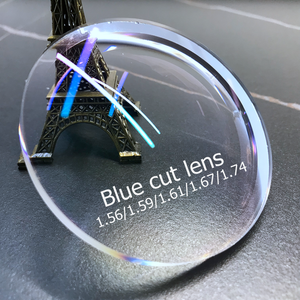
As an integrated optical manufacturer operating both frame production cells and high-precision ophthalmic lens casting lines, we engineer our cat eye collections to harmoniously interface with advanced refractive lenses:
CNC-routed interior rim grooves accommodate edge thicknesses up to 4.8mm, disguising high-index negative lens boundaries within sleek silhouette borders.
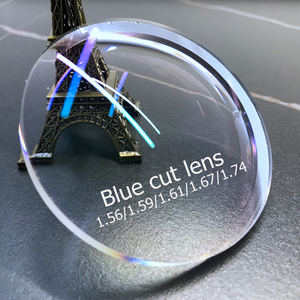
Our 1.60 aspherical MR-8 series delivers extreme tensile strength and superior impact resistance, eliminating lens micro-cracking at narrow cat eye apex corners.
Unlike outdated yellowish blue-cut coatings, our in-monomer 420nm absorbers maintain 98.4% luminous transmittance, preserving true skin tones for photography.
Specially calibrated acetate thermal shrinkage and TR90 elasticity prevent cold-weather lens popping when walking from Seoul's sub-zero streets into heated rooms.
Sourcing for the Seoul market is segmented along distinct consumer behavior patterns. Understanding the material trade-offs enables retail buyers to allocate budget efficiently across different price tiers and aesthetic demographics:
1. High-Density Bio-Cellulose Acetate for Design Boutiques: In districts like Seongsu and Hannam-dong, optical consumers demand architectural presence, deep beveling, and organic tactility. We utilize high-density (HD) bio-cellulose acetate sourced from eco-conscious cotton pulp plasticizers. HD acetate enables our factory to mill profile walls down to 3.2mm—30% thinner and lighter than standard 4.5mm vintage acetate—without losing dimensional rigidity. The frame is polished through a 72-hour automated wood-chip and pumice tumbling cycle, capped by 4 manual hand-buffing passes with carnauba wax to achieve an ultra-glossy, mirror finish that satisfies top-tier boutique standards.
2. Swiss EMS Grilamid TR90 for Urban High-Mobility & Online Retail: For high-volume e-commerce brands, chain dispensaries (such as Davich franchises), and youthful retail hubs around Hongdae and Sinchon, TR90 dominates. Our factory processes genuine injection-molded Swiss Grilamid TR90. With a specific gravity of just 1.14 g/cm³, a finished cat eye frame front weighs under 9 grams. Equipped with flexible memory retention, these frames withstand 180° temple flexure without structural fracture. Furthermore, we apply double-layer polyurethane electrostatic spray coating that resists sebum degradation, sunscreen chemicals, and cosmetic residue common in South Korea's daily skincare regimens.
Rooted in a legacy of precision European designer frame manufacturing and dedicated independent optical supply chain operations, our production facility combines old-world craftsmanship with modern automated manufacturing. We do not operate generic, one-size-fits-all production lines. Instead, every frame model is developed through a disciplined OEM/ODM protocol:
From 2D sketches or trend briefs to functional 3D SLA resin prints in 48 hours. Validate fit, balance, and temple drop with your Seoul team before opening brass casting molds.
German-cut internal temple core wires featuring custom-embossed geometric motifs, laser engraving, and dual-tone electroplating that elevate your private label's visual hierarchy.
Every lot undergoes 10,000-cycle temple endurance hinges testing, 48-hour salt spray corrosion testing, sweat immersion trials, and spectrometer transmittance checks before packaging.
Essential guidance covering customs, KC compliance, MOQ thresholds, and lens-fitting specifications for Korean optical enterprises.
Eyewear frames imported for commercial distribution in South Korea fall under the purview of the Electrical Appliances and Consumer Products Safety Control Act managed by the Korean Agency for Technology and Standards (KATS). Optical frames (classified as products subject to safety standards compliance) require KC (Korea Certification) verification. Our factory provides full material safety data sheets (MSDS), phthalate-free lab reports, and nickel-release test reports (EN 16128 compliant) necessary for streamlined KC registration through certified agencies such as KTR (Korea Testing & Research Institute) or KATRI.
We optimize both the effective diameter (ED) of the lens orbital and the bevel groove placement. By maintaining a compact lens width (typically 48mm to 52mm for women's cat eye frames) and centering the patient's pupils within the frame aperture (boxing system PD matching), edge thickness is dramatically reduced. Furthermore, our lens casting division supplies pre-calibrated 1.60 and 1.67 MR-8 aspherical blanks with custom edge bevel profiles specifically engineered to seat securely within shallow-rim cat eye eyewires.
For high-grade handmade acetate frames, our standard production MOQ is 300 pieces per model, which can be split across up to 3 custom colorways (e.g., 100 pcs Classic Gloss Black, 100 pcs Translucent Champagne, 100 pcs Tortoiseshell). For injection-molded TR90 collections, the MOQ is 600 pieces per mold tooling. For established Korean optical chains and Namdaemun wholesale distributors seeking repeat scheduled deliveries, we offer consolidated inventory stocking programs with lower reorder thresholds.
Yes. We offer three distinct Asian-Fit nose pad configurations: (1) High-step integrated acetate pads with an elevated 5.5mm crest; (2) Ultralight embedded titanium pad arms with screwless medical silicone or ceramic pads; and (3) Magnetic or click-in interchangeable bridges for universal face fitting. These configurations prevent frame slippage, maintain correct pantoscopic alignment, and ensure clearance from eyelashes and cheekbones.
Upon receipt of 2D technical drawings or physical samples, our engineering department delivers 3D digital renderings within 48 hours and functional CNC acetate prototypes within 10 to 14 days. Once pre-production samples are approved, standard mass production runs take 45 to 60 days for handmade acetate and 30 to 40 days for TR90 frames. Air cargo shipments to Incheon International Airport (ICN) arrive in 2–4 business days, while container maritime shipping to Busan Port takes approximately 5–7 transit days.
Yes. We offer high-resolution fiber laser engraving for inside-temple branding, model numbering, CE/KC conformity marks, and temple tip foil hot-stamping. In addition, our packaging workshop supplies custom-branded hard shell cases, microfiber cleaning cloths printed with your brand artwork, outer gift boxes, and Korean language product labeling complying with local fair-trade disclosure laws.
Whether you are curating an independent boutique collection for Cheongdam-dong, scaling an urban streetwear sunwear brand in Hongdae, or supplying high-volume retail optical stores across South Korea, our engineering team is ready to assist your procurement.
Contact Us