Sourced directly from our state-of-the-art multi-axis CNC manufacturing floor in China, purpose-built for dispensary shelf-differentiation and compliant with Australian optical benchmarks.
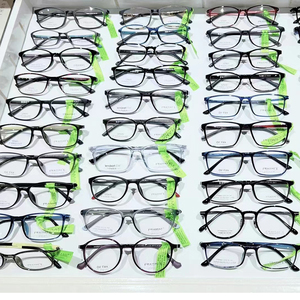
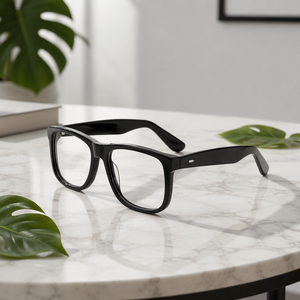
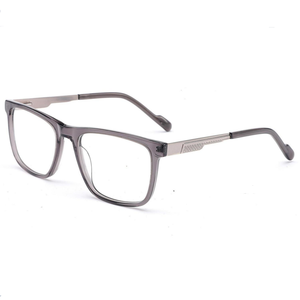

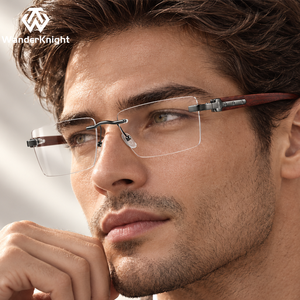
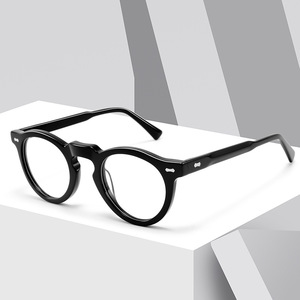
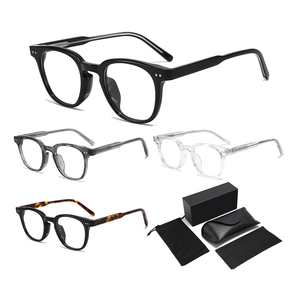
Why carbon fiber has superseded conventional acetate and injection plastics for discerning optical practices across Australia.
Our China manufacturing facility sources prime Toray carbon fibers pre-impregnated with high-grade epoxy matrix resins. Through hydraulic autoclave compression molding at 145°C under 12 bars of pressure, each frame blank delivers structural rigidity without anisotropic warping, achieving tensile strength five times greater than surgical stainless steel while dropping mass to a featherweight sub-12 grams.
Unlike inexpensive stamped carbon sheets that exhibit edge splintering and micro-delamination, our CNC milling centers cut rim grooves, bridge junctions, and temple core recesses within ±0.02mm tolerance. This allows opticians across Sydney, Melbourne, and Brisbane to cold-glaze optical prescription lenses swiftly without blowing out rim bevel tolerances.
Pure carbon fiber is naturally rigid and non-pliable, which historically presented adjusting hurdles for dispensing opticians. Our engineering solution integrates a co-molded Japanese Beta-Titanium temple core wrapped inside carbon weave laminates. Optometrists can execute cold temple bends and mastoid adjustments in-clinic with standard optical pliers, guaranteeing anatomical fit for Australian facial structures.
Australia presents one of the harshest UV, maritime, and outdoor wear environments on earth. Our carbon fiber eyewear is specifically engineered to address these localized conditions.
Australia registers some of the highest solar irradiance in the world. Conventional cellulose acetate frames experience plasticizer migration, whitening, and brittleness under intense Queensland and Western Australian sun. Our carbon fiber matrix incorporates UV-stabilized aliphatic fluorocarbon topcoats, resisting solar degradation, chalking, and discoloration even during prolonged desert and coastal sun exposure.
From Sydney Harbour to Byron Bay and Perth's Cottesloe Beach, high air salinity corrodes standard nickel-silver eyeglass screws and corrodes electroplated metal temples. Our carbon fiber glasses feature Grade 5 Titanium screws and PVD-coated marine-grade stainless hinges, providing 100% rust immunity against sweat, surf spray, and beach humidity.
In the Pilbara, Hunter Valley, and Goldfields, Australian industrial and mining workers require prescription frames capable of surviving severe vibration, dropping, and thermal spikes up to 48°C inside vehicle cabs. Carbon fiber frames maintain dimensional stability without warping or relaxing lens retention bevels under extreme thermal fluctuations.
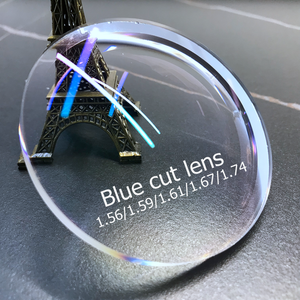
In Melbourne's Collins Street or Sydney's Barangaroo financial hubs, white-collar executives spending 10+ hours in front of multi-monitor workstations demand zero bridge fatigue. Combined with our 1.56 or 1.67 Blue-Cut ophthalmic blanks, carbon fiber frames eliminate red nasal indentations and temporal pressure headaches entirely.
How independent optometrists in Australia leverage China direct carbon fiber manufacturing to beat corporate retail monopolies.
The Australian optical retail landscape is intensely dominated by corporate chains like Specsavers and Luxottica-owned OPSM, who control standardized wholesale pricing. Independent practices cannot compete on generic acetate frame discounts. By stocking proprietary, customized carbon fiber frames directly from our factory in China, independent Australian practices carve out high-margin boutique retail pricing (AUD $380 - $650 retail RRP) with zero direct retail competition.
Australian Consumer Law and the Therapeutic Goods Administration (TGA) demand rigorous compliance for optical medical devices (Class I). Every batch exported from our facility complies with AS/NZS 1067.1:2016 for eye and face protection, and ophthalmic standard AS/NZS ISO 12870:2012, covering resistance to perspiration, optical bridge deformation, and endurance cycling up to 50,000 temple flexes.
Australian consumers exhibit strong ethical procurement preferences. The integration of recycled carbon fiber prepreg, sustainably harvested natural timber veneers, and bio-based plant acetates gives local optometrists an authentic sustainability narrative on their dispensing floor, driving organic word-of-mouth conversion.
Laboratory testing metrics verifying structural superiority for Australian procurement executives.
| Mechanical / Environmental Parameter | Toray 3K Carbon Composite (Our Standard) | Standard Italian/Chinese Acetate | Injection Molded TR-90 | Cast Stainless Steel / Monel |
|---|---|---|---|---|
| Average Frame Weight (Rimless/Full Rim) | 9.5g – 13.5g | 28.0g – 42.0g | 14.0g – 18.0g | 22.0g – 34.0g |
| Tensile Strength (MPa) | > 3,500 MPa | ~ 60 - 80 MPa | ~ 85 MPa | ~ 600 - 850 MPa |
| Thermal Distortion Threshold (Australian Sun) | > 180°C (No warping) | 55°C – 65°C (Softens in hot cars) | 75°C – 85°C | > 300°C |
| Sweat / Saltwater Corrosion Resistance | Impervious (Class 5 Salt Spray) | Moderate (Whitens over time) | High | Low to Moderate (Green verdigris) |
| Prescription Cold Glazing Capability | Excellent with CNC Rim Bevel | Requires Heating Bench (60°C) | Cold Snap-in (Loose over time) | Screw Tension Lock |
| Australian AS/NZS ISO 12870 Flex Cycle | Passed 50,000 Flex Cycles | Passed 20,000 Cycles | Passed 30,000 Cycles | Hinge Loosens at 15,000 |
From rapid CAD prototyping to door-to-door bonded air freight into Sydney, Melbourne, Brisbane, and Fremantle.
Our in-house design lab translates your 2D sketch or 3D STEP/IGES model into high-precision prototypes within seven business days. Using high-speed 5-axis CNC cutters, we create working physical samples in authentic carbon fiber and beta-titanium, allowing your optometry clinical board to inspect bridge fit, pantoscopic tilt, and temple tension before cutting hard production tooling.
We understand that independent Australian practices and emerging boutique labels cannot absorb massive 5,000-piece production runs per SKU. Our modular manufacturing cell architecture allows custom private-label branding, laser engraved logos, and custom pantone coloration on carbon fiber temples with low minimum order quantities starting as low as 100 to 300 pieces per model.
As experienced China exporters to Australia, our documentation department handles the complete export compliance pipeline. We provide ChAFTA (China-Australia Free Trade Agreement) Certificate of Origin (COO Form AANZFTA), securing preferential zero-tariff customs entry at Australian border control. Full technical dossiers, biocompatibility skin-contact testing reports (ISO 10993), and CE/FDA declarations are provided for smooth TGA inclusion.
Answers to common logistical, regulatory, and engineering questions posed by buyers in Australia.
Yes. Ophthalmic spectacle frames are classified as Class I Medical Devices in Australia. Our carbon fiber frames and composite sunglasses comply fully with AS/NZS ISO 12870:2012 and AS/NZS 1067.1:2016. We furnish factory Declarations of Conformity, nickel release test certificates, and biocompatibility verification required by Australian sponsors for ARTG listing.
While the pure carbon fiber front retains rigid dimensional integrity, our designs engineer flexible Beta-Titanium core inserts inside the carbon composite temples. Dispensers can apply standard optical bridge and temple pliers without heating to achieve precise temple spread, ear curl curvature, and pantoscopic angle adjustment in less than two minutes.
We routinely supply orders under FOB (Shenzhen/Guangzhou/Hong Kong), CIF, or DDP (Delivered Duty Paid) directly to your warehouse in Sydney, Melbourne, Brisbane, Adelaide, or Perth. Urgent sample parcels via DHL/FedEx arrive within 3 to 5 business days, while volume commercial consignments via air cargo take 7 to 10 days, or 18 to 22 days via sea freight.
Absolutely. We provide end-to-end bespoke packaging solutions including customized hard shell cases, microfiber cleaning cloths woven with custom branding, certified eco-friendly cardboard packaging, and micro-precision laser engraving on inside temple tips and demo lenses to enhance retail shelf presence.
No. Our 5-axis CNC machines mill a specialized V-bevel or U-groove with micro-chamfered edges, engineered specifically for standard CR-39, polycarbonate, Trivex, and high-index (1.67, 1.74) lenses. Lenses snap securely into place using standard cold insertion techniques without rim fracturing or stress delamination.
Under the China-Australia Free Trade Agreement (ChAFTA), spectacle frames imported with an official Certificate of Origin enjoy 0% customs duty. Consignments are solely subject to the standard Australian 10% Goods and Services Tax (GST), claimable via your regular Australian Business Number (ABN) Business Activity Statement (BAS).
Whether you are expanding a chain of independent optometry clinics across Australia or engineering an exclusive luxury eyewear label, our OEM/ODM manufacturing team is ready to ship evaluation samples and discuss wholesale volume margins.
Contact Us