
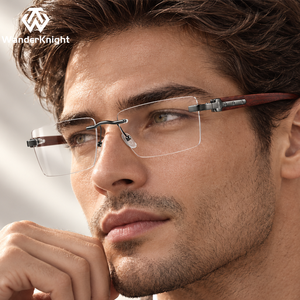
Bespoke Rimless
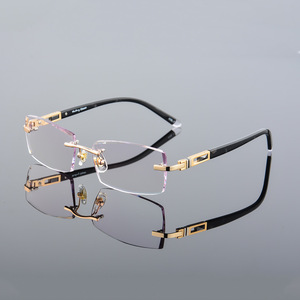
Calibrated strictly to Japanese industrial tolerances, our export lines combine ultralight pure titanium, memory alloys, zero-nickel plating, and diamond-cut edges built to complement independent board plans.

The Chubu economic sphere—anchored by Nagoya, Toyota City, and Kariya—represents one of the most discerning consumer markets in Japan. With a regional GDP heavily driven by high-technology automotive manufacturing, aerospace engineering, and automated machinery, the regional demographic possesses an intrinsic appreciation for structural engineering, mechanical tolerances, and metallurgical integrity. Unlike Tokyo's fast-fashion turnover or Osaka's street-level eclecticism, eyewear purchasing in Nagoya prioritizes structural longevity, unobtrusive architectural elegance, and ergonomic weight balance.
For independent opticians (眼鏡専門店), private clinical dispensaries, and boutique retail curators along Nagoya’s premier commercial districts—such as Sakae (栄), Meieki (名駅), and the refined residential hubs of Hoshigaoka and Chikusa—procuring metal eyeglass frames requires meeting technical criteria that exceed generic wholesale specifications. Our international supply network bridges global high-precision fabrication hubs with direct shipping into Nagoya Port and Chubu Centrair International Airport (NGO), providing Aichi retailers with competitive landed margins while preserving uncompromising craftsmanship.
Sourcing metal frames for the Japanese domestic retail landscape is fundamentally governed by three structural pillars: Corrosion Resistance under Humid Conditions, Micro-Tolerance Screw Assembly, and Biocompatible Skin Interfacing. Standard copper-zinc base metals fail rapidly in Japanese coastal climates and during humid summer cycles. Consequently, our export catalog focuses exclusively on cold-drawn Japanese beta-titanium, lightweight memory alloys, and medical-grade austenitic stainless steel.
| Alloy Classification | Yield Strength (MPa) | Specific Density (g/cm³) | Surface Treatment Method | Optimal Nagoya Retail Demographic |
|---|---|---|---|---|
| Pure Grade-2 Titanium (Ti-Pure) | 345 – 480 | 4.51 | Ion-Plated PVD / 5-Layer Lacquer | Corporate Executive & Clinical Daily Wear (Meieki Corporate Hubs) |
| Beta-Titanium Alloy (Ti-15V-3Cr-3Sn-3Al) | 880 – 1020 | 4.65 | Electro-Deposition with Ceramic Clear Coat | Minimalist Flexible Temple Wire for Extended Screen Ergonomics |
| Surgical 316L Stainless Steel | 290 – 310 | 8.00 | Micro-Bead Blasted Satin Finish | Contemporary Geometric Frames for Sakae Creative Consultancies |
| Nickel-Free Monel Chassis | 550 – 620 | 8.80 | Electroless Double-Layer Barrier Plating | Cost-Effective Institutional Volume for Chain Store Dispensing |
Automotive designers and robotics systems architects require featherweight frames with stable pantoscopic angles (8° to 10°). Our beta-titanium sheet-cut silhouettes feature 3D-adjustable silicone pads that mitigate bridge fatigue during 12-hour CAD shifts.
Discerning retail customers in Sakae look beyond mainstream branding. Our architectural polygon chassis, antique bronze finishes, and diamond-trimmed rimless designs serve high-end fashion optical shops seeking higher profit margins.
Dispensaries serving Nagoya's aging suburban communities need deeper lens rim grooves (B-measurement ≥ 36mm) for progressive additions. Our lightweight monel alloy frames balance structural rigidity with easy frame adjustment.
The Japanese Ministry of Health, Labour and Welfare's ongoing push for workplace ergonomics, paired with shifting retail shopping behaviors across Aichi Prefecture, has highlighted three macro trends directly shaping optical procurement:
Consumer preferences have decisively shifted from thick acetate blocks to ultra-thin metal profiles weighing under 12 grams. Hybrid constructions—combining laser-cut metal brows with ultra-fine wire temples—now dominate wholesale inquiries.
Japanese customs clearance demands strict compliance with consumer skin-contact guidelines. Our factory finishes utilize Physical Vapor Deposition (PVD) that eliminates hexavalent chromium and volatile organic release, satisfying Japanese import standards.
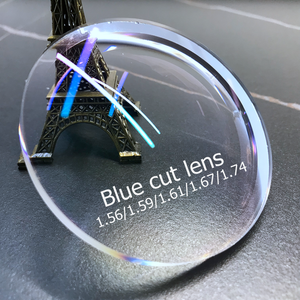
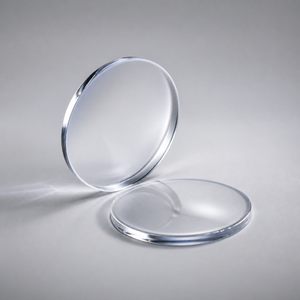
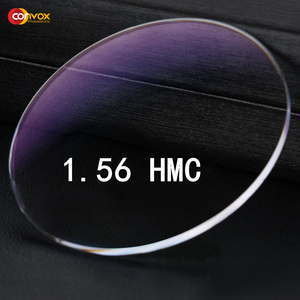
Rather than stocking blank frames alone, Japanese opticians prefer turn-key bundled shipments that include precision 1.56/1.60 monomer cut-blue lenses. This pairing streamlines order fulfillment for optical retail operations.
Drawing from years of optical design distribution and export logistics, our manufacturing and distribution network operates with institutional discipline. Every metal chassis is engineered through precision mold fabrication, multi-axis micro CNC trimming, and meticulous ultrasonic multi-stage bath cleaning. We believe that independent optical retailers succeed through curated product differentiation, reliable lead times, and comprehensive technical documentation.
Screw threads, bridge solder points, and temple spring closures are tested to 25,000 continuous hinge flex cycles without pitch degradation.
Low Minimum Order Quantities (MOQs) allow independent Nagoya boutiques to test new designs without tieing up working capital in excess stock.
Direct air freight consolidation into Chubu Centrair (NGO) and sea freight into Nagoya Port ensures predictable landed timetables and clean customs entry.
Comprehensive metallurgical testing certificates, nickel-leach reports, and JIS/CE/FDA declaration dossiers are provided with every wholesale consignment.
While Sabae represents the benchmark of artisanal Japanese titanium craftsmanship, our overseas precision lines match equivalent physical tolerances (JIS B7285 specifications for dimensional stability and hinge endurance) at a scalable commercial export price point. This allows Aichi retailers to maintain strong margin spreads while offering dependable product quality.
In-stock catalog silhouettes ship within 48 to 72 hours via express air cargo (DHL/FedEx/SF Express) into Chubu Centrair Airport (NGO), with door-to-door transit averaging 4 to 6 business days. Custom OEM orders requiring laser engraving, private labeling, or custom PVD colorways take approximately 25 to 35 production days.
Yes. All metal chassis exported to Nagoya are configured with extended-arm titanium or surgical-grade PVC/silicone nose pads engineered for shallower nasal profiles. We also supply interchangeable ceramic and titanium pad hardware upon request.
Every production batch undergoes EN 1811 and EN 12472 laboratory testing to ensure nickel-leaching rates remain below 0.5 μg/cm²/week. Official metallurgical test reports are included with shipping manifests to ensure smooth customs clearance through Nagoya Port and Osaka Regional Customs.
To support independent optometry clinics and boutique stores throughout the Chubu area, our catalog models are available starting at 5 to 10 pieces per colorway. This allows buyers to curate a diverse board presentation across various rim sizes and finishes without heavy inventory overhead.
Yes. We regularly consolidate structural alloy frames with our 1.50, 1.56, and 1.60 index ophthalmic blanks (hard-multi-coated with hydrophobic and blue-light filtration layers). This reduces total freight costs and simplifies receiving for your dispensing opticians.
Connect with our technical export division to review full alloy compositions, landed CIF Nagoya pricing schedules, and physical frame samples for your boutique or dispensing practice.
Send an Inquiry